
Last updated October 15, 2026
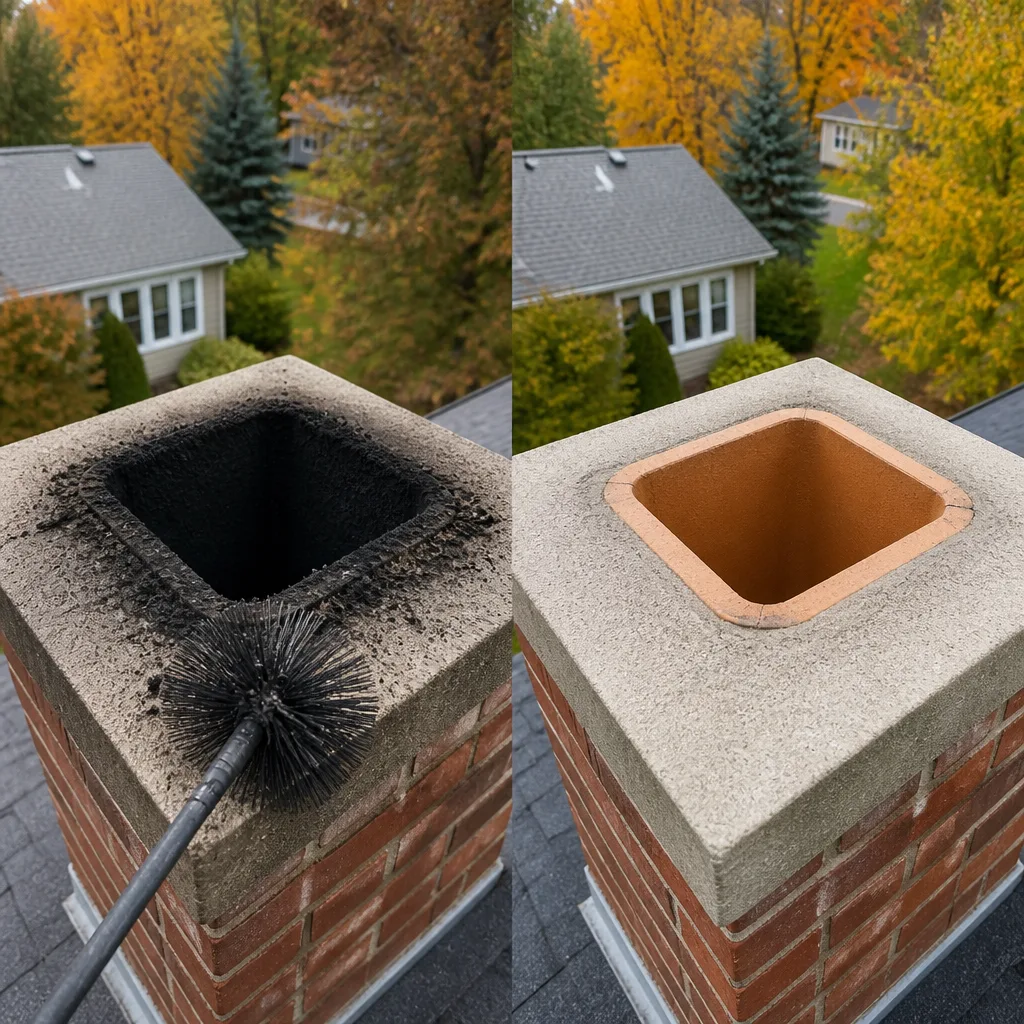 Sweep & inspection
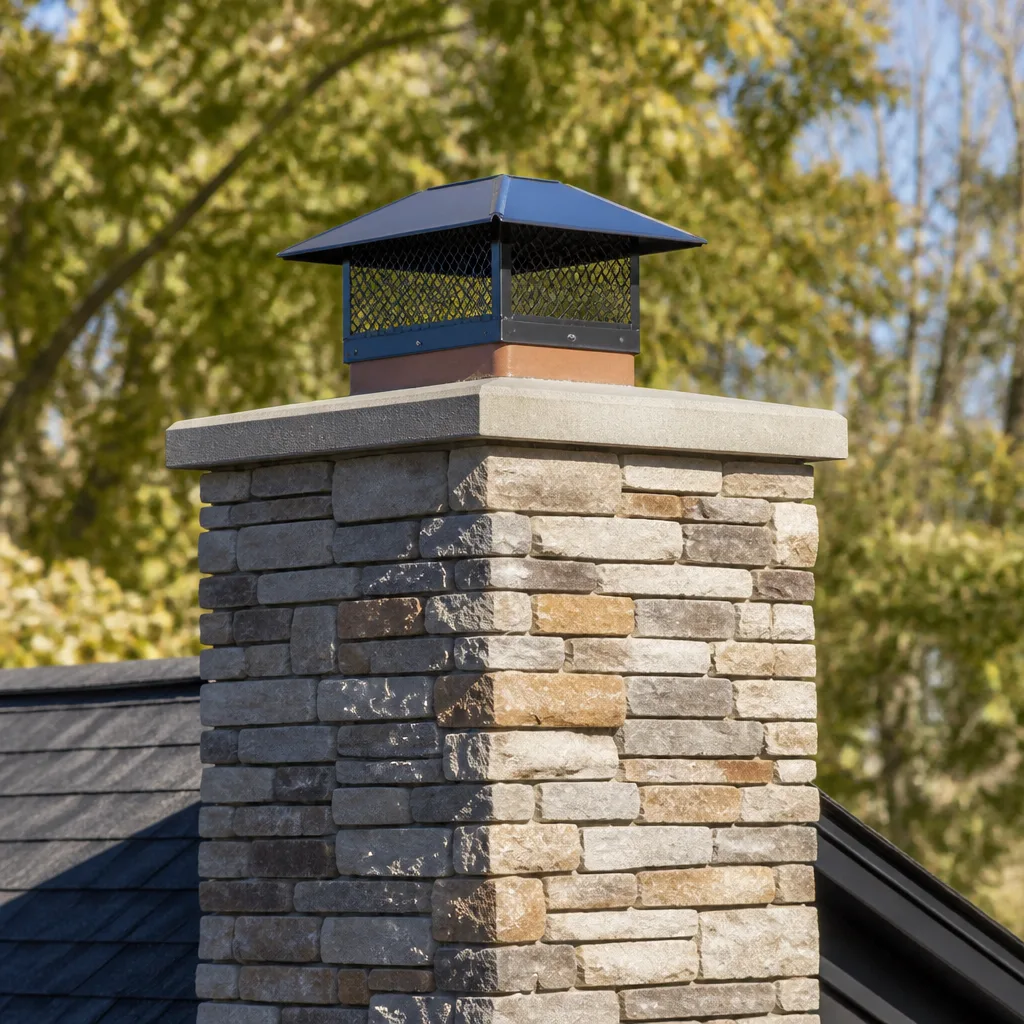 Caps & crowns
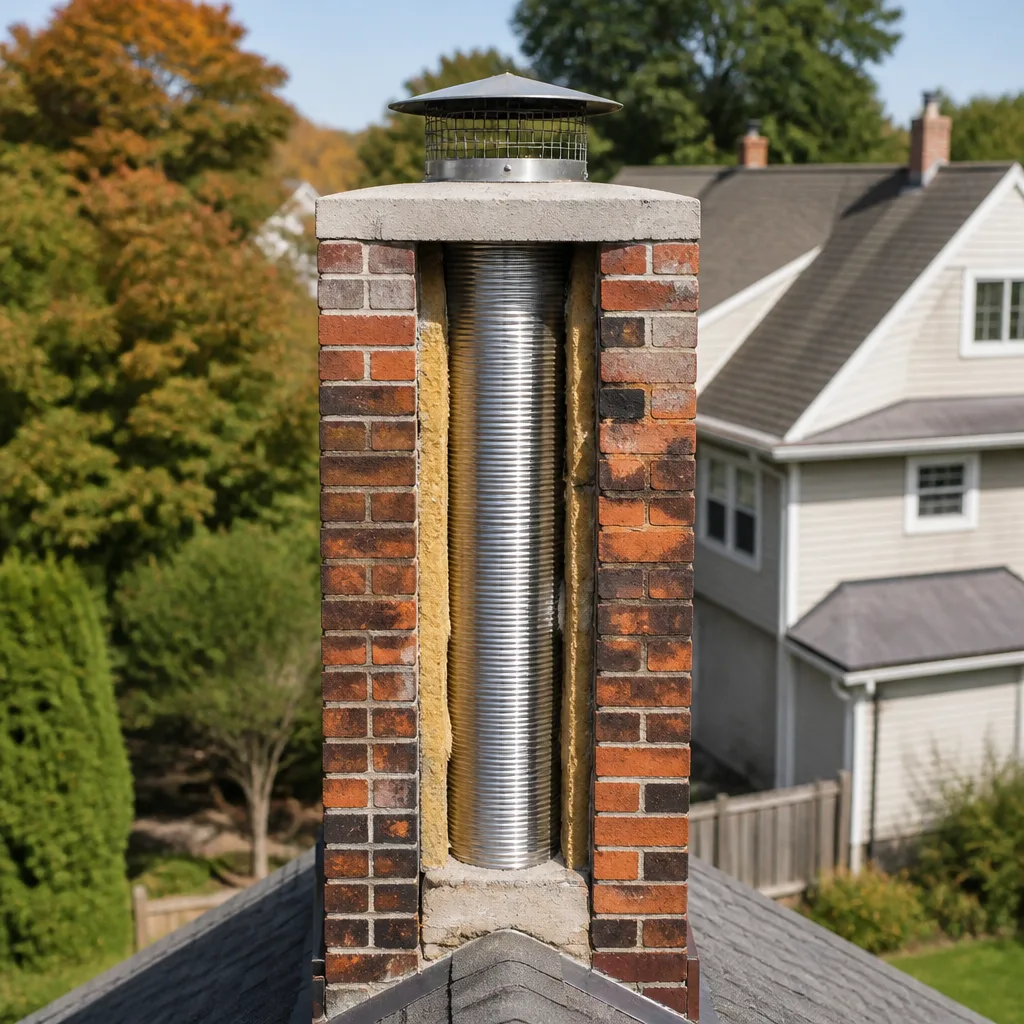 Flue relining
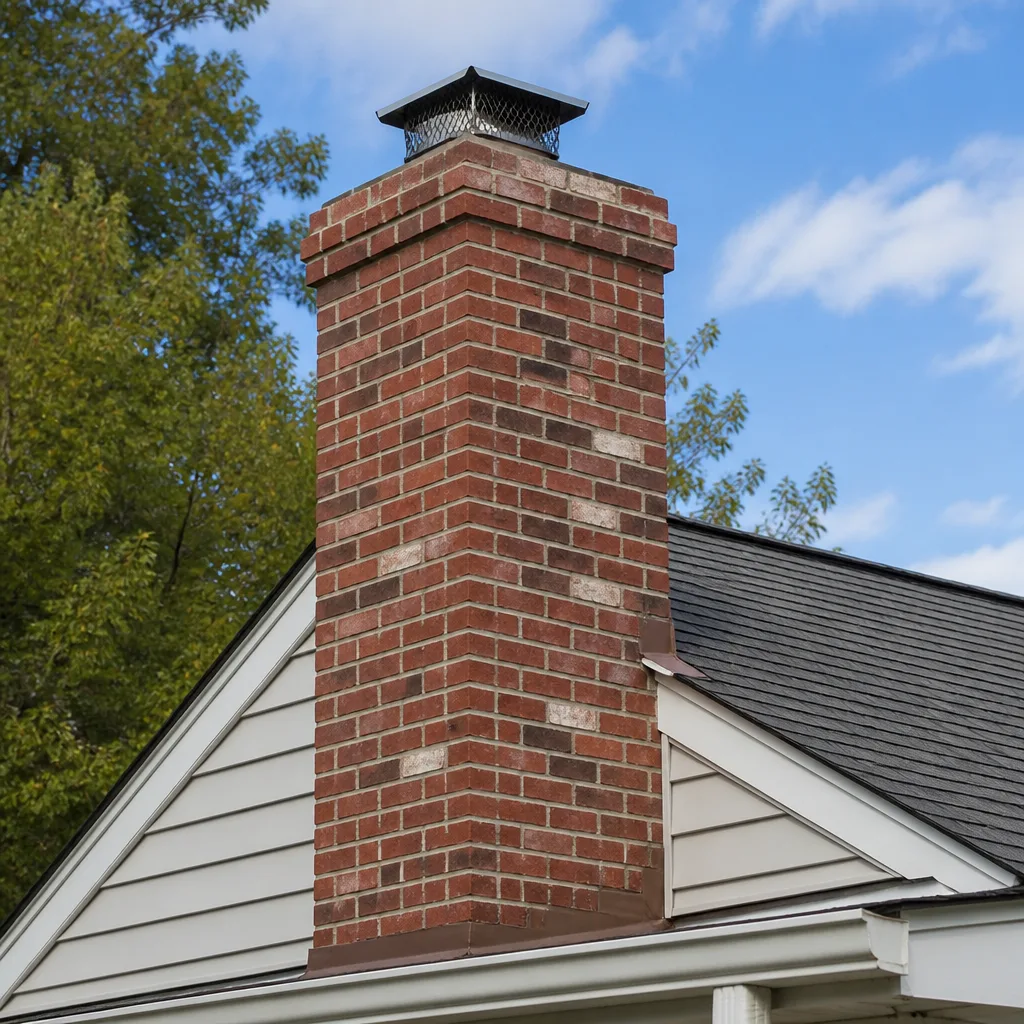 Masonry repair
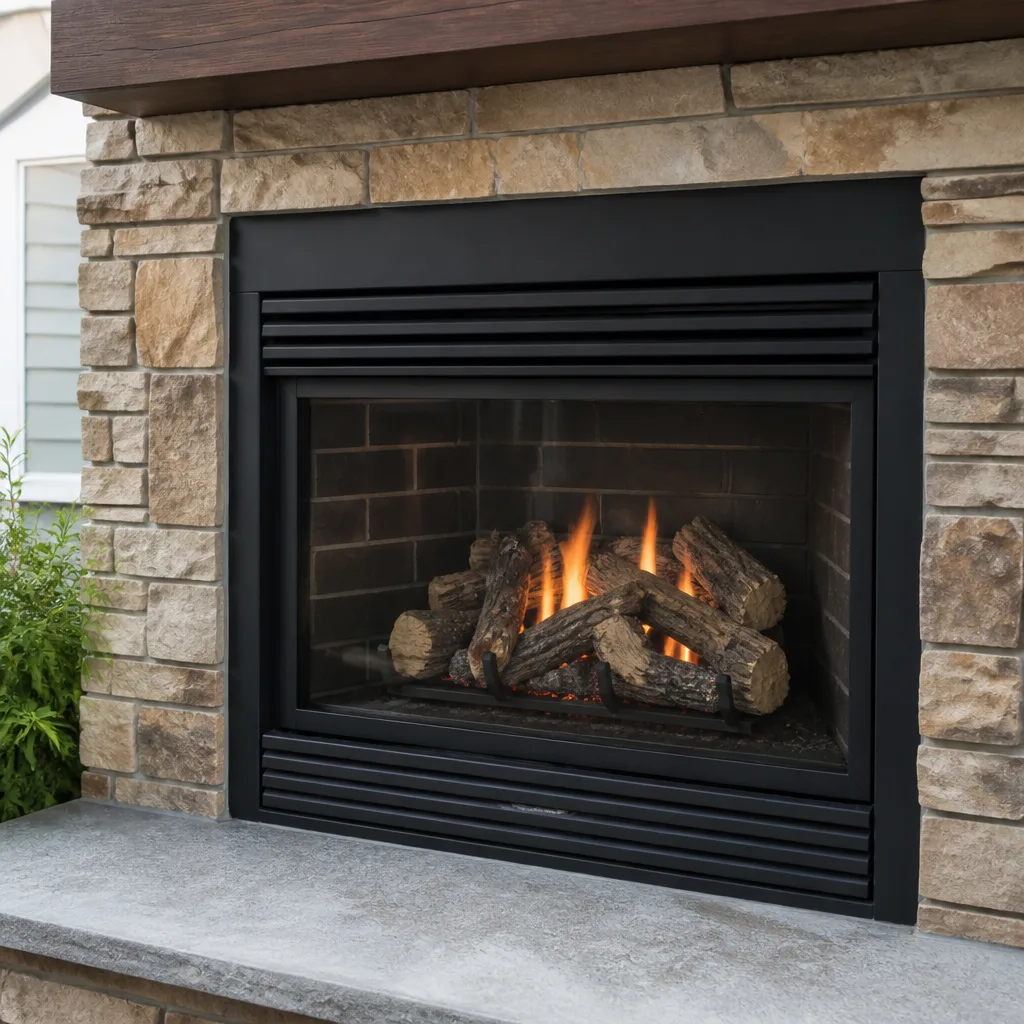 Gas fireplace service
Level 1 sweep and inspection to the NFPA 211 annual standard - flue, crown, cap, and flashing checked and photographed
Chimney sweep logs do not sweep chimneys. They loosen some creosote - which then falls where a brush and vacuum still have to collect it.
Chimney Cleaning Permits, Codes & Inspections in CA: What You Need to Know
Every year, California homeowners get handed a repair quote after a routine chimney sweep and face the same question: does this need a permit? The sweep itself almost never does. But the moment a technician finds a cracked liner, a deteriorated firebox, or a cap that needs full replacement, the legal ground shifts. In Santa Clarita and across Los Angeles County, unpermitted chimney liner work has blocked home sales at escrow, sometimes years after the original visit. This guide walks you through exactly where the permit line sits, which codes actually matter, and how to document everything from day one.
Styles & brands we work with
Quick Answer
Chimney cleaning and inspection (Level 1 or Level 2) do not require a permit anywhere in California. However, structural repairs such as flue relining, firebox rebuilding, or changing a chimney’s height or footprint often require a building permit from your local jurisdiction, including the City of Santa Clarita. The smart move is to have every finding documented in writing during the cleaning visit-see our Chimney Sweep Maintenance Checklist for Santa Clarita Homeowners for what to request-because that report becomes your disclosure trail if repairs are needed later.
Table of Contents
- Where the Permit Line Actually Sits in California
- The California Residential Code Sections That Govern Chimneys
- What NFPA 211 Is and Why California Adopts It
- Los Angeles County vs. City of Santa Clarita: Permit Differences
- Cleaning and Inspection: No Permit, But Documentation Required
- How a Written Sweep Report Becomes a Disclosure Document
- The Escrow Problem: When Unpermitted Work Blocks a Sale
- Common Mistakes to Avoid
- When to Call a Professional
- Frequently Asked Questions
- The Bottom Line
Where the Permit Line Actually Sits in California
Chimney work falls into two categories under California law: maintenance and modification. Maintenance means cleaning, inspecting, and replacing worn components with like-for-like materials. Modification means changing the structure, height, material, or footprint of the chimney. Maintenance generally requires no permit. Modification generally does.
That sounds straightforward until you look at what a chimney sweep actually finds during a cleaning. Creosote buildup is maintenance. A cracked clay liner with gaps in the mortar joints is a defect that, if relined, crosses into modification territory in most jurisdictions. Replacing a rusted chimney cap with the same size cap is maintenance. Enlarging the flue opening or changing the cap’s anchoring system is modification. Rebuilding a firebox with new firebrick, new refractory mortar, and new dimensions is modification. Rebuilding that same firebox exactly as it was, brick for brick, sits in a gray zone that building officials interpret differently from one counter to the next.
In our experience across Santa Clarita, homeowners get into trouble not because they intended to skip a permit, but because their chimney company told them the work was “all included” and no permit was mentioned. By the time the city gets involved, usually during a resale inspection, the repair is years old and the original contractor is out of business. The homeowner is left holding the paperwork problem.
The cleanest rule to operate from: if anything structural changes, call your building department and ask. It costs nothing to ask. It can cost thousands to unwind.
The California Residential Code Sections That Govern Chimneys
California adopts the International Residential Code (IRC) with state-specific amendments and publishes it as the California Residential Code, usually abbreviated CRC. Chimney provisions live in Chapter 10, specifically sections R1001 through R1006. Here are the ones that matter for homeowners deciding whether to repair or replace.
- CRC R1001 (Masonry Fireplaces): Governs construction of masonry fireplaces, including footing size, wall thickness, and the 2-inch minimum airspace between masonry and combustible framing. If a firebox rebuild changes these dimensions, a permit is required.
- CRC R1003 (Chimneys and Fireplace Systems): Covers the chimney itself, including flue liner requirements. Section R1003.9 requires that masonry chimneys be lined with approved clay, metal, or listed flue lining material, per the original construction or better. Replacing a clay liner with a stainless steel liner still requires a permit in most California jurisdictions, because the material and installation method change.
- CRC R1004 (Factory-Built Fireplaces): Governs prefabricated or zero-clearance fireplace units. These must be listed and labeled, and repairs must use components approved by the original manufacturer. Mixing component brands without approval violates the listing and can void the manufacturer’s warranty, which is a different liability than a permit but often gets caught during the same resale inspection.
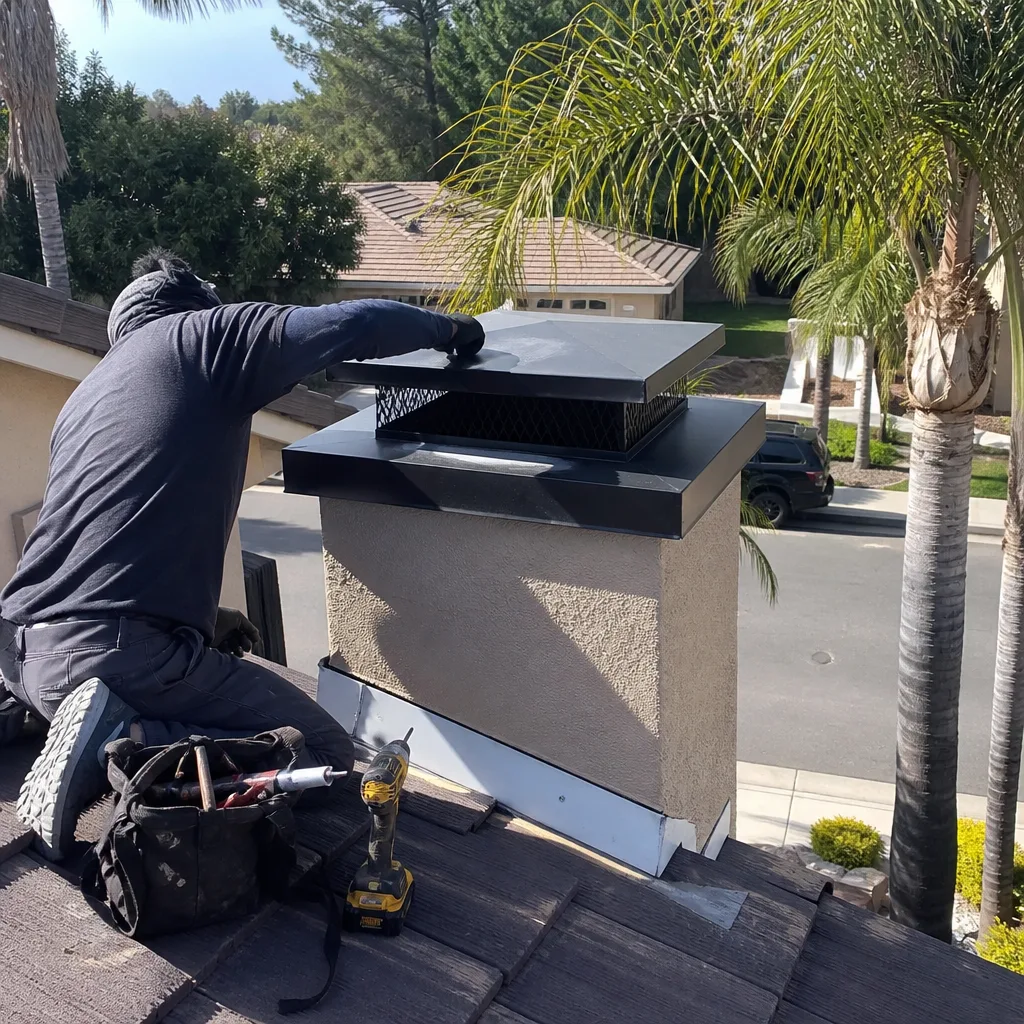
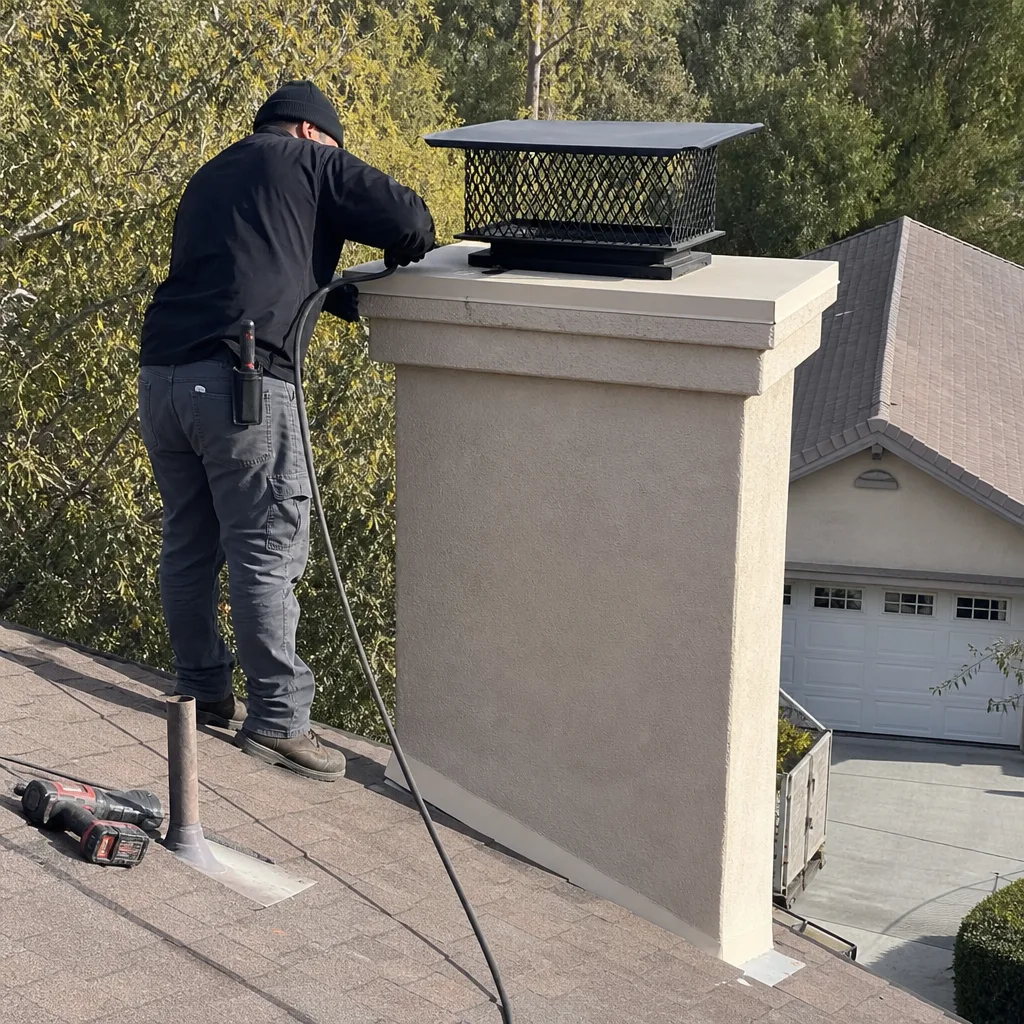
- CRC R1006 (Spark Arrestors and Chimney Caps): Requires spark arrestors in wildfire-prone zones. This matters in Santa Clarita, where much of the city sits within a designated Fire Hazard Severity Zone. The spark arrestor must have openings no larger than ½ inch and be constructed of noncombustible material. Replacing a missing cap with a compliant cap is considered maintenance. Modifying the flue top to accommodate a different cap system triggers permit review.
The key point most homeowners miss: finding a code violation during an inspection does not create an obligation to repair it immediately. But it does create a disclosure obligation if you later sell the home. A chimney sweep who documents “spalling brick at flue cap, spark arrestor missing” has put that condition in writing. That written record now travels with the house.
What NFPA 211 Is and Why California Adopts It by Reference
NFPA 211 is the National Fire Protection Association standard for chimneys, fireplaces, vents, and solid fuel-burning appliances. California does not print the full text of NFPA 211 into its building codes. Instead, the CRC adopts it by reference in specific sections, which means the standard has the force of law without being reprinted. That’s why your local building official can enforce a standard you cannot easily read for free.
The sections homeowners should understand are Chapter 1 (which mandates annual inspection of chimneys), Chapter 8 (which defines the three levels of inspection), and Chapter 11 (which governs clearances to combustible materials).
What the three inspection levels mean:
- Level 1 inspection: Visual check of accessible portions of the chimney and appliance. Performed during routine maintenance, when no changes to the system have occurred. No special tools, no permit required, and almost always bundled with a sweep.
- Level 2 inspection: Everything in Level 1, plus video scanning of the flue interior, inspection of attic and crawl space clearances, and exterior evaluation. Required by NFPA 211 whenever a property changes hands, after an earthquake or chimney fire, or when the fuel type or appliance is changed. In Santa Clarita, the Chimney Inspection in Santa Clarita performed at resale is usually a Level 2.
- Level 3 inspection: Everything in Levels 1 and 2, plus partial demolition of concealed areas when a Level 2 reveals a condition that needs direct visual confirmation. This is rare and reserved for serious structural questions. When this occurs, it is documented in writing before any masonry is opened.
The critical homeowner takeaway: NFPA 211 does not say your chimney must be cleaned every year. It says the chimney must be inspected annually, and cleaned when the inspection shows deposits sufficient to create a fire hazard. Many companies market “annual cleaning” as a requirement. The code says inspect annually; clean when needed. A good sweep will tell you the same.
A Chimney Sweep in Santa Clarita who documents inspection findings in writing is doing more than cleaning a flue. They are creating the record that protects you at resale, or alerts you to a problem before it becomes a $4,000 repair instead of a $400 one. The written record is the entire game.
Los Angeles County vs. City of Santa Clarita: Permit Differences
Santa Clarita is an incorporated city, which means it issues its own building permits through the city’s Community Development Department. Unincorporated Los Angeles County goes through LA County Building and Safety. The two entities use the same California Residential Code, but they apply it with different enforcement practices and different fee schedules.
Here is where the rubber meets the road for chimney work.
- Flue relining: The City of Santa Clarita generally requires a permit for relining when the work changes the liner material, size, or configuration, which is nearly every relining job. LA County similarly requires a permit for liner replacement. Both jurisdictions want to see a completed installation by a licensed contractor, and both recover the work via an inspection that confirms clearance to combustibles.
- Firebox rebuilding: When firebricks are reset with refractory mortar and the dimensions stay identical, some jurisdictions treat it as a repair. Both Santa Clarita and LA County trend toward requiring a permit once any brick is removed and replaced in a quantity that constitutes rebuilding. Ask before the work begins. The counter staff at either office will tell you plainly.
- Chimney cap and spark arrestor replacement: A like-for-like cap swap is maintenance in both jurisdictions. However, Santa Clarita sits in a designated wildfire risk area, and the city’s fire code references CRC R1006. If the replacement cap is not compliant with the ½-inch mesh requirement, you’ve installed a violation, not a fix.
- Chase covers on factory-built units: Replacing a rusted chase cover or top pan on a prefabricated chimney generally requires no permit in either jurisdiction, because it is a component replacement with listed parts. But if the top pan is so deteriorated that the underlying framing is damaged, the repair expands and a permit may be required.
The difference between the county and the city is mostly procedural: Santa Clarita is generally faster at the counter, but both offices reward a homeowner who shows up with clear photos and a written report from the sweep. Our technicians see this every season; a polite, documented question gets a clear answer, while a vague verbal description gets sent home for more information.
One more Santa Clarita specific point: many homes in Valencia, Canyon Country, Saugus, and Newhall were built during the building boom of the 1960s through the 1980s. A meaningful percentage of those masonry chimneys were constructed without proper footing reinforcement. When a liner replacement exposes that condition, the repair scope can expand into structural work that absolutely requires a permit and an engineered fix. You find this during a chimney repair visit, not on a county website.
Cleaning and Inspection: No Permit, But Documentation Required
Chimney cleaning in Santa Clarita or anywhere else in California requires exactly zero permits, as explained in The Complete Guide to Chimney Cleaning in Santa Clarita. You can legally hire anyone to sweep your flue, and you can legally do it yourself. What is not optional is the record of what the cleaning found. Here is what we recommend every homeowner request from a sweep visit, whether they hire us or anyone else.
- Written condition report, not a verbal summary. The report should list what was found, what was cleaned, and any conditions that may require future repair. If the sweep will not put it in writing, that is a red flag.
- Before and after photos. A proper sweep uses a camera system to document what the flue looked like before and after cleaning. These photos are your evidence trail. If a subsequent repair is recommended, you can see the issue with your own eyes.
- Creosote measurements. The report should classify creosote as Stage 1, Stage 2, or Stage 3. Stage 1 is light and removable with standard brushes. Stage 2 requires mechanical removal. Stage 3 indicates a fire risk and may require chemical treatment or liner replacement. This classification drives the next step.
- Scope of work sign-off. The technician should document exactly what was performed: which flue was cleaned, what tools were used, and what condition the appliance was in at the end of the visit. This is the document the next contractor will want to see.
We write every finding down before we leave the property, with a price, scope, and a full-year guarantee in writing. That practice is rare. Most chimney companies in California hand over a receipt and a verbal “looks fine.” When it turns out not to be fine, the homeowner has a receipt and nothing else.
How a Written Sweep Report Becomes a Disclosure Document
When you sell a home in California, you are legally required to disclose all known material facts affecting the property’s value or desirability. That includes chimney conditions. A written report from a sweep that says “cracked flue liner at mid-flue, monitor annually” is a material fact. If you do not disclose it at sale, and the buyer’s Level 2 inspection finds it anyway, you have a problem. If the condition was only mentioned verbally, there is no record, and disputes turn into he-said-she-said.
The written report cuts both ways. It protects the seller by showing that the condition was known, documented, and either repaired or disclosed. It protects the buyer by providing the evidence trail that justifies the repair cost. And it protects the next contractor, who can read exactly what the previous technician saw instead of guessing at the flue’s history.
Hank Delano, who runs Flint Chimney Co Santa Clarita, has handled more than a few cases where a verbal “you’ll need to keep an eye on that” from a previous company turned into a legal scramble at closing. The fix is simple: get it in writing, every time, from the first trick of the brush.
The Escrow Problem: When Unpermitted Work Blocks a Sale
Here is the scenario that got our original hook. A homeowner in Valencia has a routine cleaning done in 2022. The sweep notes a deteriorated liner and recommends replacement. The homeowner hires a contractor who installs a new stainless steel liner. No permit is pulled, no inspection is performed, and the receipt says “liner replacement” with no detail about materials, clearances, or code compliance.
Two years later, the homeowner sells. The buyer hires an inspector who performs a Level 2 scope. The inspector flags the liner installation and asks for the permit. The seller does not have one. Escrow stalls. The buyer requests either a retroactive permit, which is expensive and not guaranteed, or a credit at closing. The seller now has a problem that began with a simple chimney cleaning.
This is the single most common chimney-related escrow issue in Los Angeles County, and Santa Clarita sees its share of it. The frustrating part is that the problem is entirely preventable. A written report at the time of the original cleaning would have flagged the liner condition. A permit pulled at the time of replacement would have satisfied the resale requirement. The documentation gap is what creates the liability.
The same principle applies to a firebox rebuild. If the rebuild changed the dimensions of the firebox, even slightly, it is a modification that may require a permit. If the previous owner or current owner cannot produce one, the buyer’s inspector will likely note it, and the transaction can stall. This is the hidden cost of hiring the cheapest chimney contractor available.
Common Mistakes to Avoid
- Assuming the sweep company knows the permit rules. Many chimney technicians are excellent at cleaning and know little about local permitting. The responsibility is yours to verify before a repair starts. Ask the contractor directly whether a permit will be pulled, and get the answer in writing.
- treating a verbal report as sufficient documentation. A verbal summary fades. When you need the record two years later during a resale, there is nothing to show. Demand a written report with photos on every visit, even a routine cleaning.
- repairing a listed factory-built fireplace with non-listed parts. Mixing component brands on a prefabricated unit violates the manufacturer’s listing. This can create a serious safety issue and will almost certainly get flagged during a resale inspection. Use the parts the manufacturer specifies, full stop.
- ignoring fire hazard zoning in Santa Clarita. Many Santa Clarita neighborhoods sit in established Fire Hazard Severity Zones. A missing or oversized spark arrestor is a violation, and it is the kind of detail a buyer’s inspector will find quickly. Fix it during the sweep, not after the offer.
- discarding the original installation records for a factory-built chimney. When a prefabricated fireplace is installed, the listing label and installation manual stay with the unit. Lose those documents, and a subsequent inspection becomes much more difficult. Keep them with your property records.
- skipping the Level 2 inspection before buying. In California, NFPA 211 requires a Level 2 inspection whenever property changes hands. Most buyers skip it. Then they discover a cracked liner after closing, with no seller to hold accountable. Spend the $300 now, not $4,000 later.
When to Call a Professional
Call a professional when the inspection reveals any deposit or condition that suggests the chimney is not functioning as designed. Specific triggers: Stage 2 or Stage 3 creosote, visible cracks in the flue liner, spalling brick on the exterior chimney, a chimney cap that is missing or rusted through, smoke entering the living space, or any water staining on the ceiling near the chimney chase. None of these are DIY situations, and most are not permit situations either. But they all require a documented professional opinion. Flint Chimney Co Santa Clarita offers free estimates in Santa Clarita – call (661) 430-6125 and we will put the finding, the price, and the guarantee in writing before any work begins.
Frequently Asked Questions
No. Chimney cleaning and Level 1 or Level 2 inspections require no permit anywhere in California, including Santa Clarita. The permit question only arises when the cleaning turns up a structural defect that requires repair, such as a cracked liner, and that repair changes the chimney’s material, dimensions, or configuration.
A standard chimney sweep in Santa Clarita typically runs between $180 and $340 for a single flue, depending on the level of creosote buildup and the accessibility of the roof. A sweep combined with a Level 1 inspection usually stays in that range. If the technician finds Stage 3 creosote or damage requiring further evaluation, the price goes up because the scope changes. Call (661) 430-6125 for a written quote before any work starts.
NFPA 211 requires an annual inspection of any chimney connected to a solid fuel-burning appliance. Cleaning is required when the inspection shows enough creosote or soot to create a fire risk. For a fireplace used a few times a week during winter, that usually means a sweep every one to two years. A heavily used wood stove may need it twice a season.
Creosote builds up in layers. Stage 1 creosote is fluffy and removable with a brush. Stage 2 is harder, requiring mechanical scraping. Stage 3 is a glazed, tar-like coating that can ignite inside the flue. A chimney fire at Stage 3 can crack the liner, which is the defect that triggers most liner replacement permits. Skipping sweeps turns a $200 maintenance task into a $3,000 or $4,000 liner job.
Most California homeowner policies cover chimney damage when it results from a covered peril, such as fire, falling objects, or certain weather events. They do not cover damage that results from deferred maintenance. A cracked liner caused by years of water intrusion is usually a maintenance issue, not an insurance claim. Document every inspection so you can prove maintenance was performed.
A flue liner is the inner wall of the chimney that channels smoke and heat safely out of the house. You need a new one when the existing liner is cracked, spalled, or deteriorated to the point where it can no longer contain the heat and gases. We show every recommendation on camera, so you can see the condition with your own eyes. If the liner is intact and functioning, we say so, and no repair is recommended. Call (661) 430-6125 to get a straight answer in writing.
The Bottom Line
Chimney cleaning in California requires no permit. The repairs that cleaning uncovers often do, especially liner replacement and firebox rebuilding in jurisdictions like the City of Santa Clarita. The recurring problem is documentation: a verbal report becomes worthless at resale, while a written report protects both seller and buyer. Pull permits when structural work is required, keep every inspection record, and treat a factory-built fireplace like any other listed appliance that demands manufacturer-specific parts. The cheapest sweep may cost you thousands later. Flint Chimney Co Santa Clarita home provides documented sweeps, inspections, and Chimney Repair in Santa Clarita with a written guarantee on every repair, valid for one full year.
Written by Hank Delano, Owner at Flint Chimney Co Santa Clarita, serving Santa Clarita since 2002.
See the difference
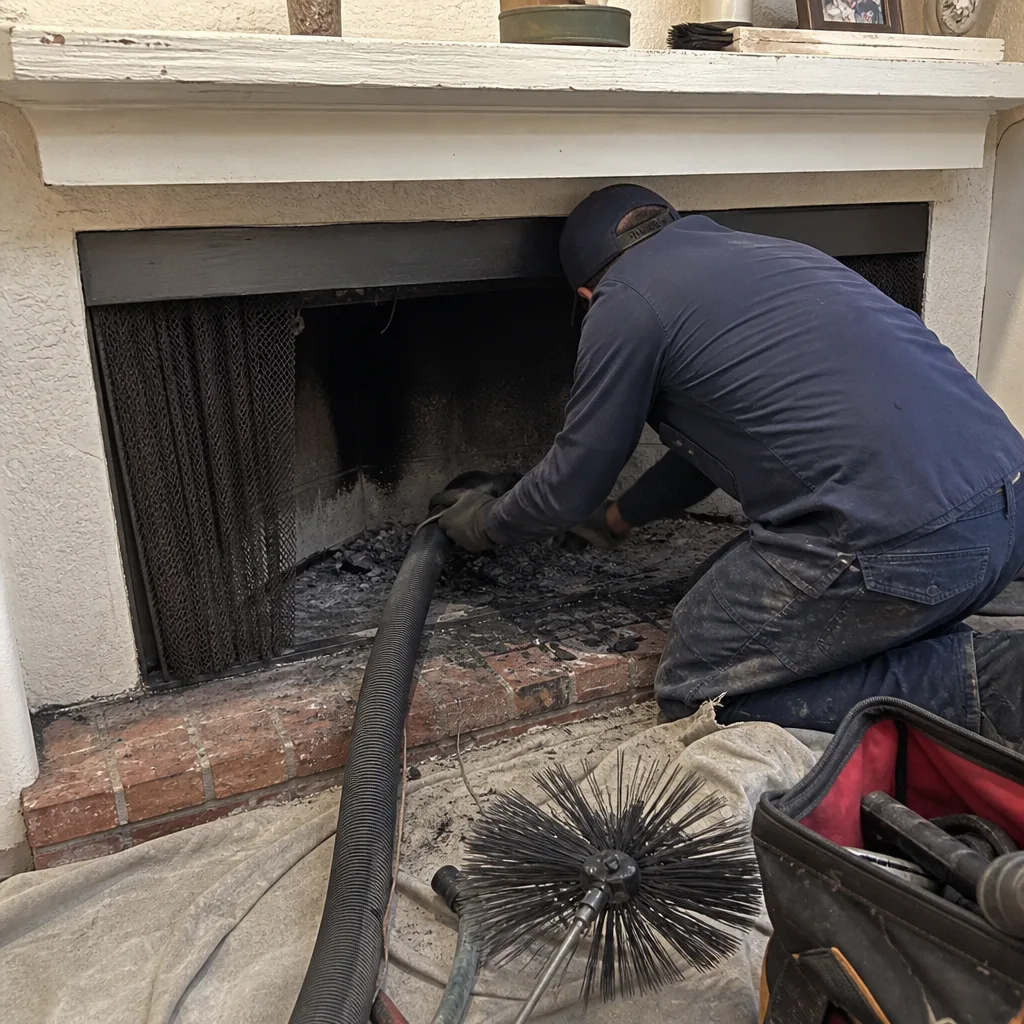 Before
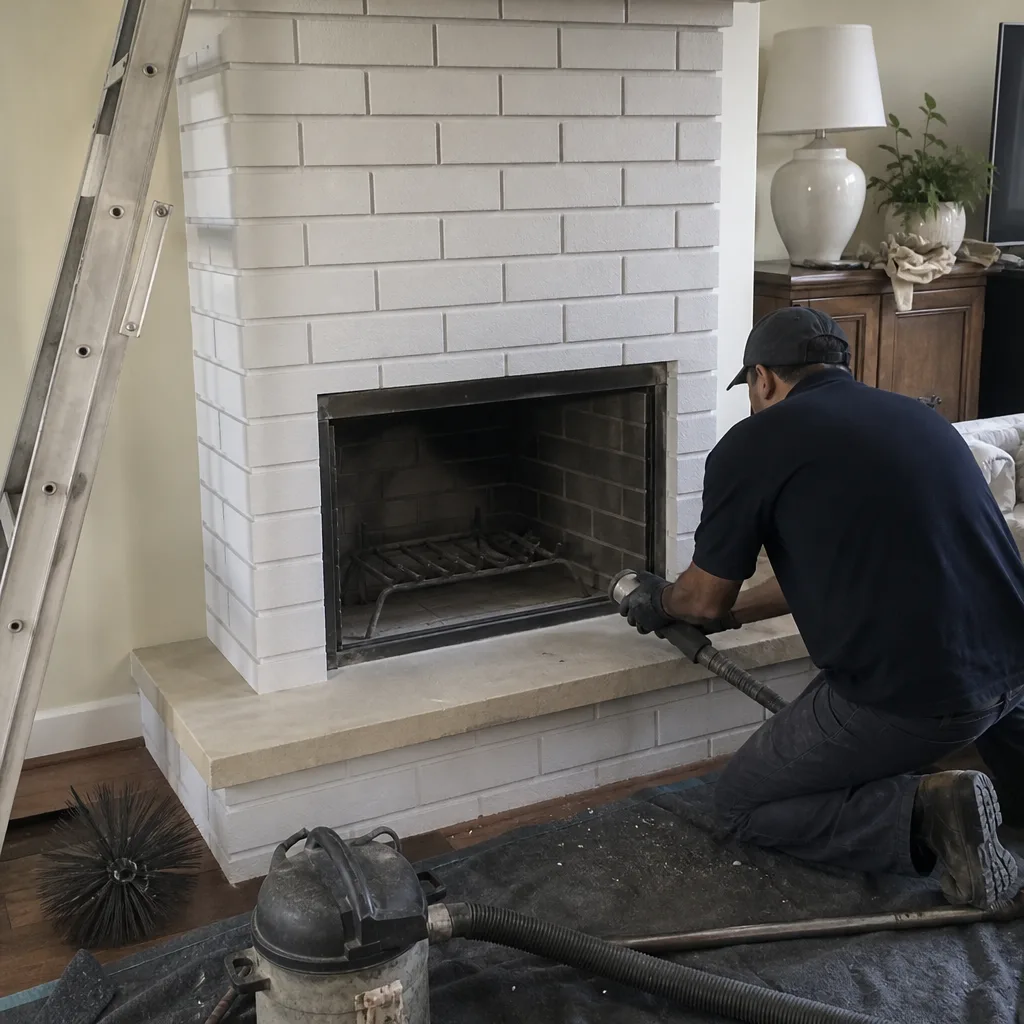 After
After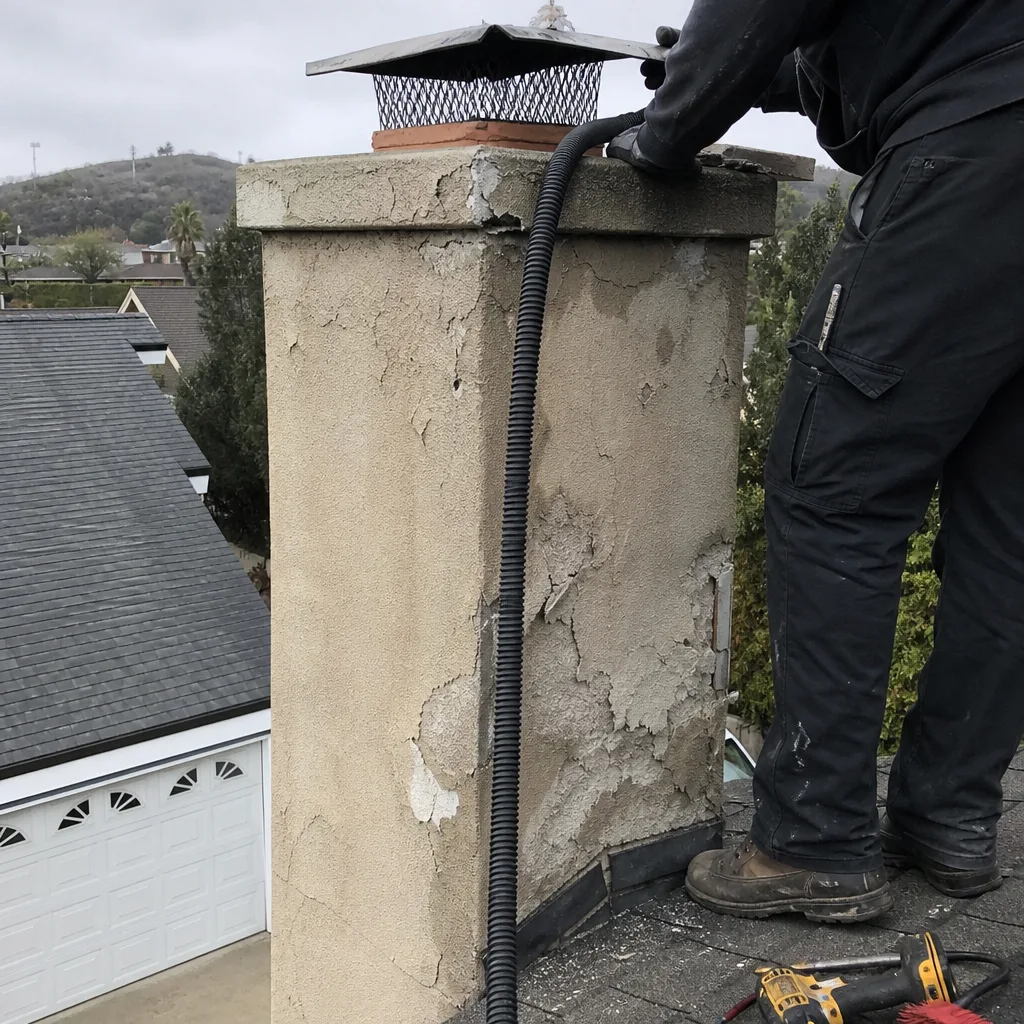 Before
 After
After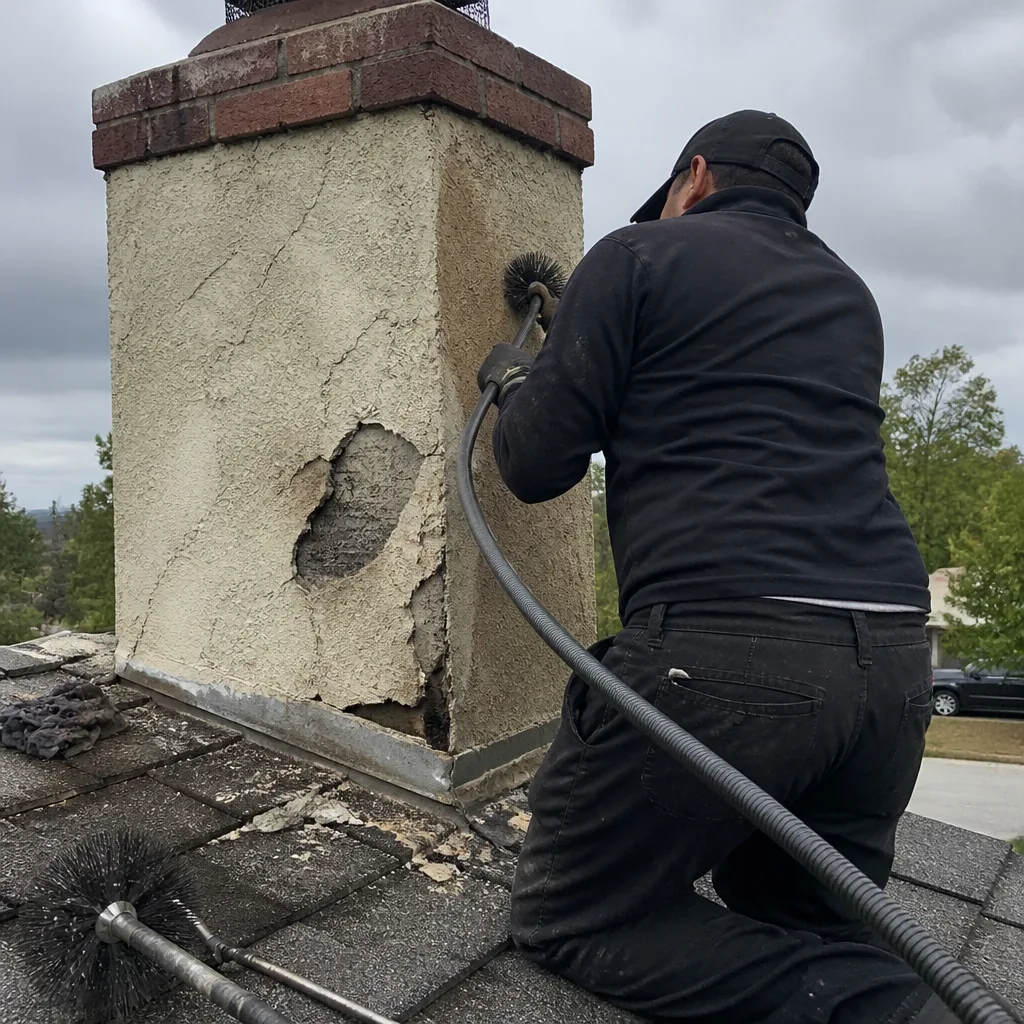 Before
 After
After