
Last updated October 15, 2026
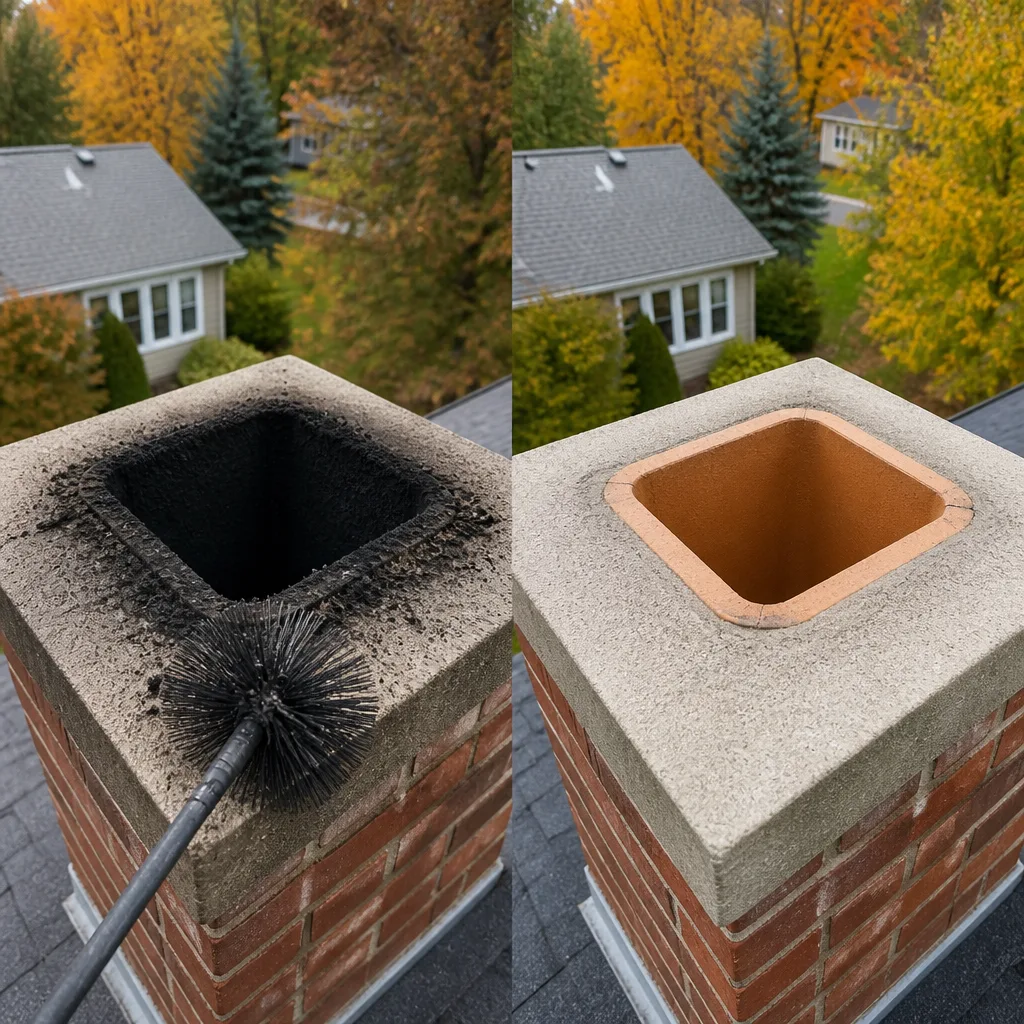 Sweep & inspection
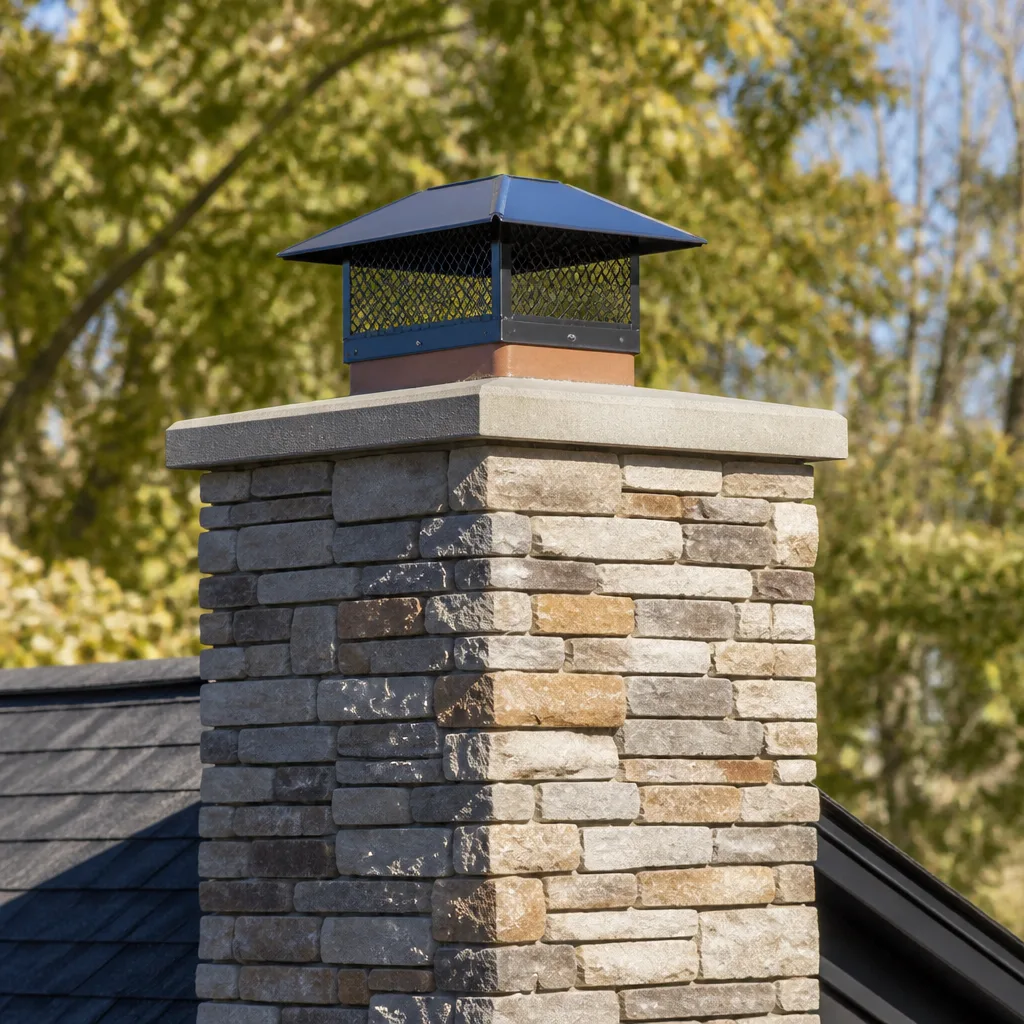 Caps & crowns
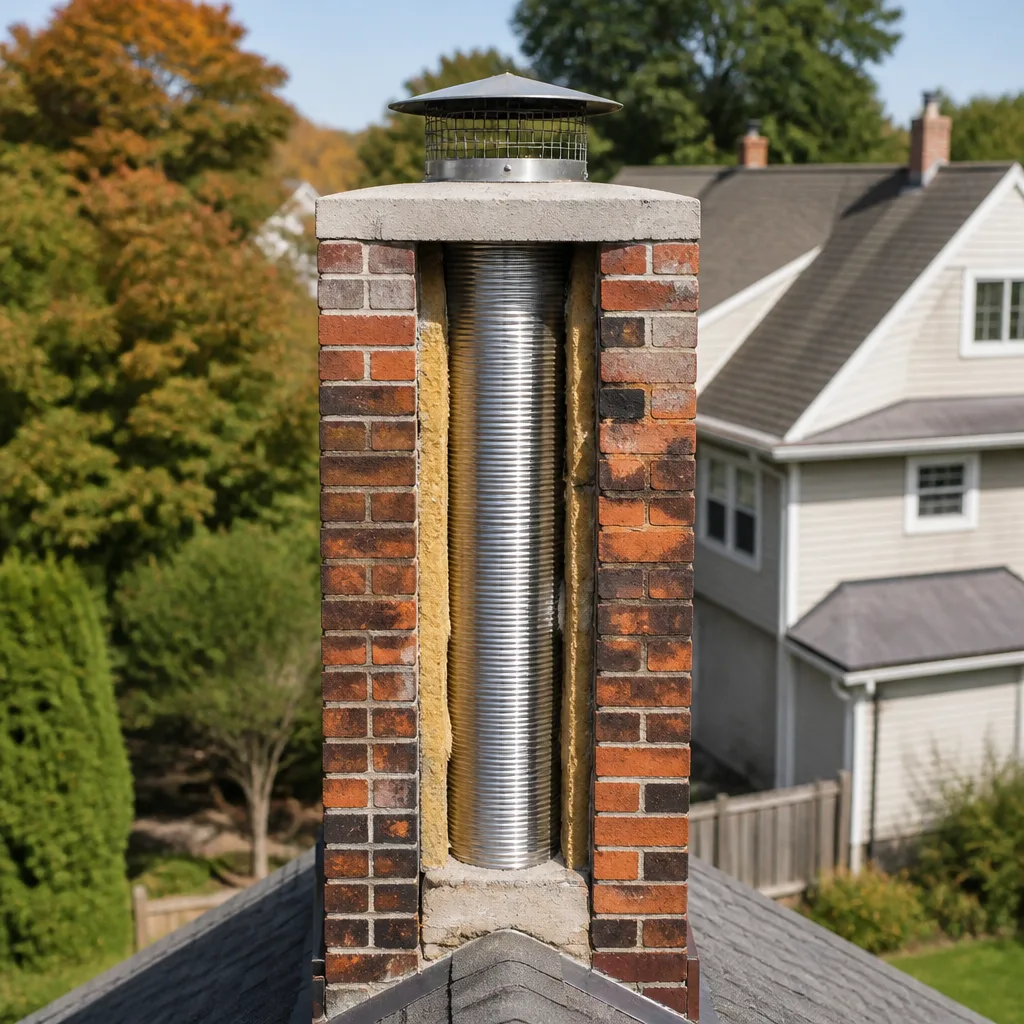 Flue relining
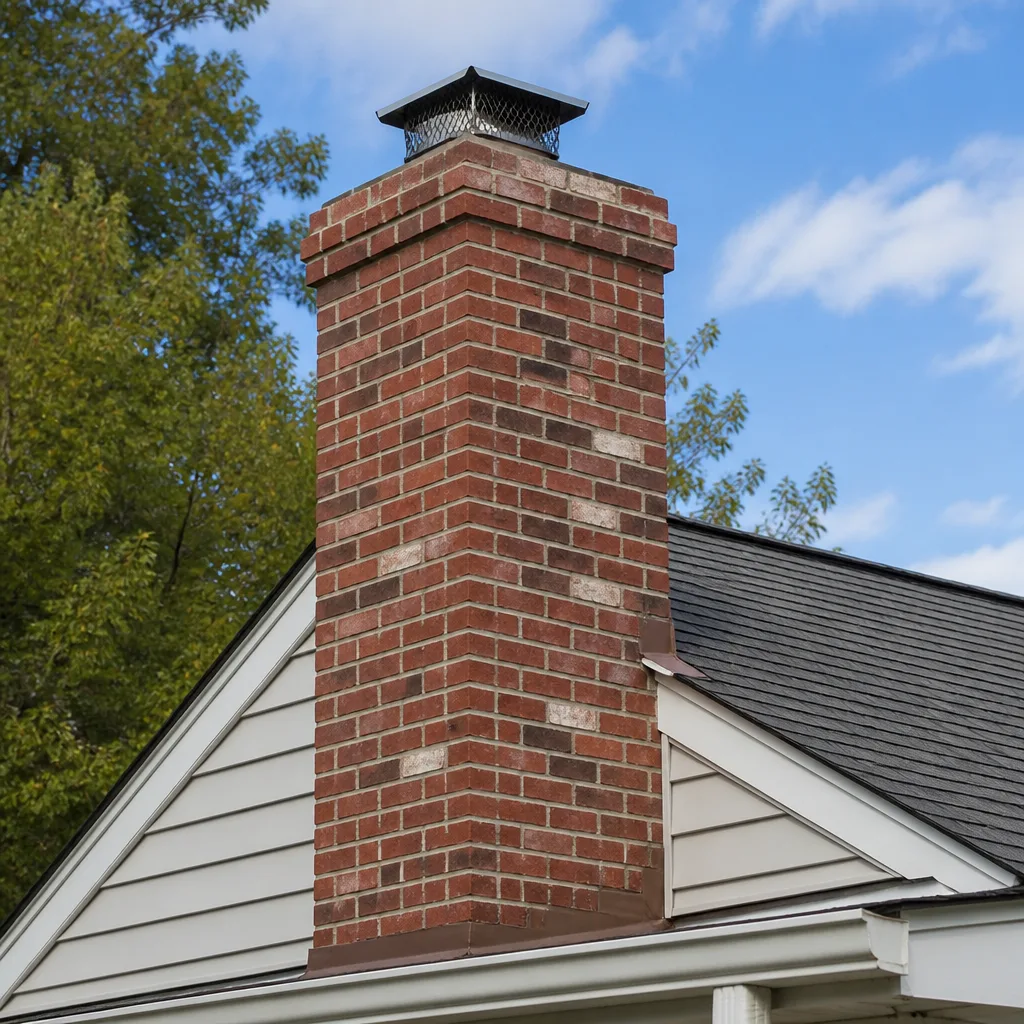 Masonry repair
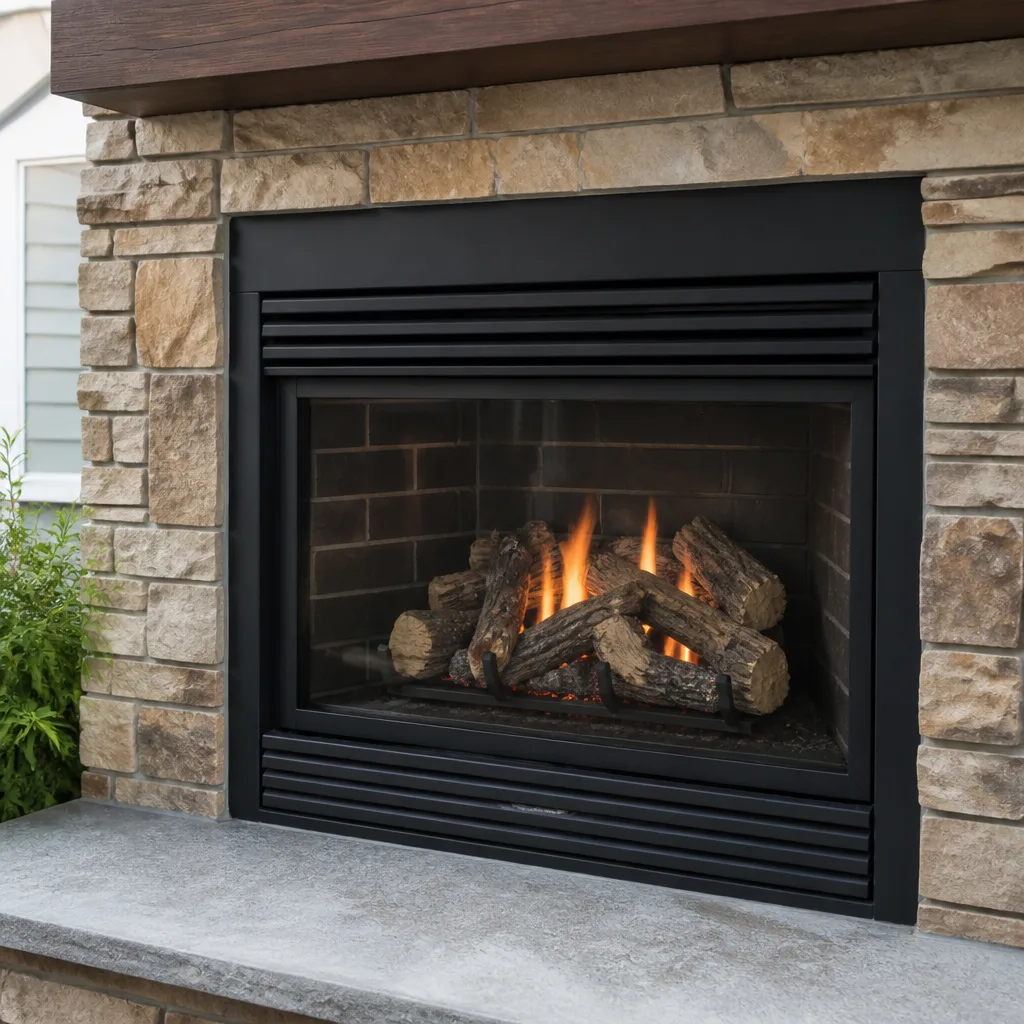 Gas fireplace service
Level 1 sweep and inspection to the NFPA 211 annual standard - flue, crown, cap, and flashing checked and photographed
Chimney sweep logs do not sweep chimneys. They loosen some creosote - which then falls where a brush and vacuum still have to collect it.
Chimney Cleaning Warning Signs: A Santa Clarita Homeowner’s Reference Guide
A chimney that smells like campfire in July, when no fire has been lit since February, is not a curiosity. It is a draft reversal event, and it usually means the liner seal has failed. Most homeowners open a window. That fixes the smell for an afternoon and does nothing for the problem. This guide is built for Santa Clarita homeowners who want to know which chimney warning signs are cosmetic annoyances, which ones are structural warnings, and which ones can put carbon monoxide into a bedroom at 3 a.m. without a single visible clue.
Quick Answer
A chimney needs professional attention when you see white mineral staining on masonry, rust on the damper or firebox, crumbling mortar joints, or dark staining near the flue chase ceiling, or when you smell fireplace odors in warm weather. The most dangerous warning sign, a cracked flue liner, produces no smoke, no smell, and no visible soot, and can only be detected with a chimney camera inspection. If you have observed any warning sign, the next step is a documented chimney inspection, not a guess.
Styles & brands we work with
Table of Contents
- Visible Signs You Can Document Yourself
- The Invisible Signs That Require a Camera
- Efflorescence: The White Staining Everyone Dismisses
- Draft Reversal Events in Santa Clarita
- Brown or Yellow Ceiling Stains Near a Flue Chase
- Creosote Buildup: What It Is and Why It Matters
- What a Chimney Sweep and Inspection Cost in Santa Clarita
- Common Mistakes to Avoid
Visible Signs You Can Document Yourself
Some chimney problems announce themselves in ways any homeowner can photograph with a phone. These are the warning signs worth documenting before you call a sweep, because a written record of what you observed helps the technician know where to look first.
White staining on the chimney exterior. This is called efflorescence, and it means water is moving through the masonry. We cover it in detail below, but for now, know this: it is not paint overspray and it is not normal aging.
Rust on the damper, firebox, or visible metal components. Rust means water has entered the flue and sat on metal. In Santa Clarita’s dry climate, rust on a damper usually indicates a leaky chimney cap or a cracked crown, because the interior of the flue gets wet only when something above it fails.
Crumbling or missing mortar between bricks. Called spalling when it progresses to brick faces flaking off, this is what happens when water soaks into masonry and the freeze-thaw cycle does its work. It does not have to be cold often in Santa Clarita for this to happen; a few nights near freezing each winter is enough to split saturated mortar.
Dark staining or streaks on the exterior chimney face. Soot staining on the outside of the chimney usually indicates a drafting problem, a cracked flue, or a poorly sized flue. The smoke is not exiting the top cleanly, so it is condensing somewhere and finding a way out through masonry gaps.
Shaling, or thin flaky pieces of chimney tile in the firebox. Flue tiles crack and delaminate when they are heated unevenly, usually after years of use or after a chimney fire. If you find what looks like thin terracotta potato chips in the firebox, the liner has started to fail. This is not cosmetic. Do not build another fire until a camera inspection has been done.
If you are documenting visible signs, take photos from multiple angles and note when you first noticed each issue. That timeline matters when a technician is deciding whether a problem is active or old. When you book a Chimney Inspection in Santa Clarita, the technician can compare what you documented with what the camera shows inside the flue.
What to Photograph Before Calling
- The chimney exterior from ground level, all four sides if accessible.
- Close-ups of any white staining, rust, or cracked mortar.
- The firebox interior, damper, and any visible metal.
- Any ceiling or wall staining in rooms adjacent to the chimney chase.
- The chimney cap, if visible from the roof or with a zoom lens from the ground.
A good sweep will ask about these observations. A better one will put the findings in writing before recommending any repair. That is the difference between a company that documents and one that guesses.
The Invisible Signs That Require a Camera
The warning signs that kill people are the ones with no visible smoke and no smell. A cracked flue liner can allow carbon monoxide to enter a wall cavity, travel along framing, and seep into a bedroom. Carbon monoxide is colorless, odorless, and heavier than air in high concentrations. You will not wake up from it. The only way to detect a cracked liner before it becomes a poisoning event is a chimney camera inspection.
In our experience in Santa Clarita, we see more liner damage in homes built before 1990, when clay tile liners were the standard. Those liners crack after decades of thermal expansion and contraction. The firebox may look fine. The damper may open and close normally. The chimney may draw well. But the flue above the firebox, where nobody looks, is compromised.
Here is what a camera inspection can find that a visual check cannot:
- Hidden flue cracks in clay tile liners, especially above the smoke chamber.
- Gaps between flue tiles where mortar has failed and combustion gases can escape.
- Birds’ nests, squirrels’ nests, or raccoon debris blocking the flue mid-height, where it cannot be seen from either end.
- Damaged or improperly installed connectors where a furnace or water heater vents into the chimney.
- Creosote buildup stage, which determines whether a sweep is routine or urgent.
A camera inspection is not an add-on upsell. It is the diagnostic standard. The trade has known this for decades. Every reputable chimney company provides one because there is no other way to see the middle 90% of the flue. If a company quotes a liner replacement without showing you the camera footage, you do not have to accept the quote. You should not accept the quote.
One question to ask on the phone before booking a sweep when a warning sign is already present: does the estimate include a written cause-and-condition report? The report should state what was found, what it means in plain language, and what work, if any, is recommended. If the answer is no, call someone else. A Chimney Sweep in Santa Clarita that does not document findings is guessing at your safety.
Efflorescence: The White Staining Everyone Dismisses
Efflorescence is a diagnostic indicator, not a stain. When water moves through masonry, it dissolves mineral salts inside the brick and mortar. When the water reaches the surface and evaporates, the salts are left behind as a white, powdery deposit. That deposit is efflorescence.
Here is the key: efflorescence only appears when water is actively moving through the masonry from one side to the other. A chimney with efflorescence has water getting into places it should not be. The stain itself is not the problem. The water intrusion is the problem. The stain is just the evidence.
What causes it in a Santa Clarita chimney? In our experience in this climate, it usually traces to one of three failures:
- A cracked crown. The crown is the concrete or mortar cap at the top of the chimney. It is the roof of the chimney, and it sheds water. When it cracks, water drains into the masonry instead of off it.
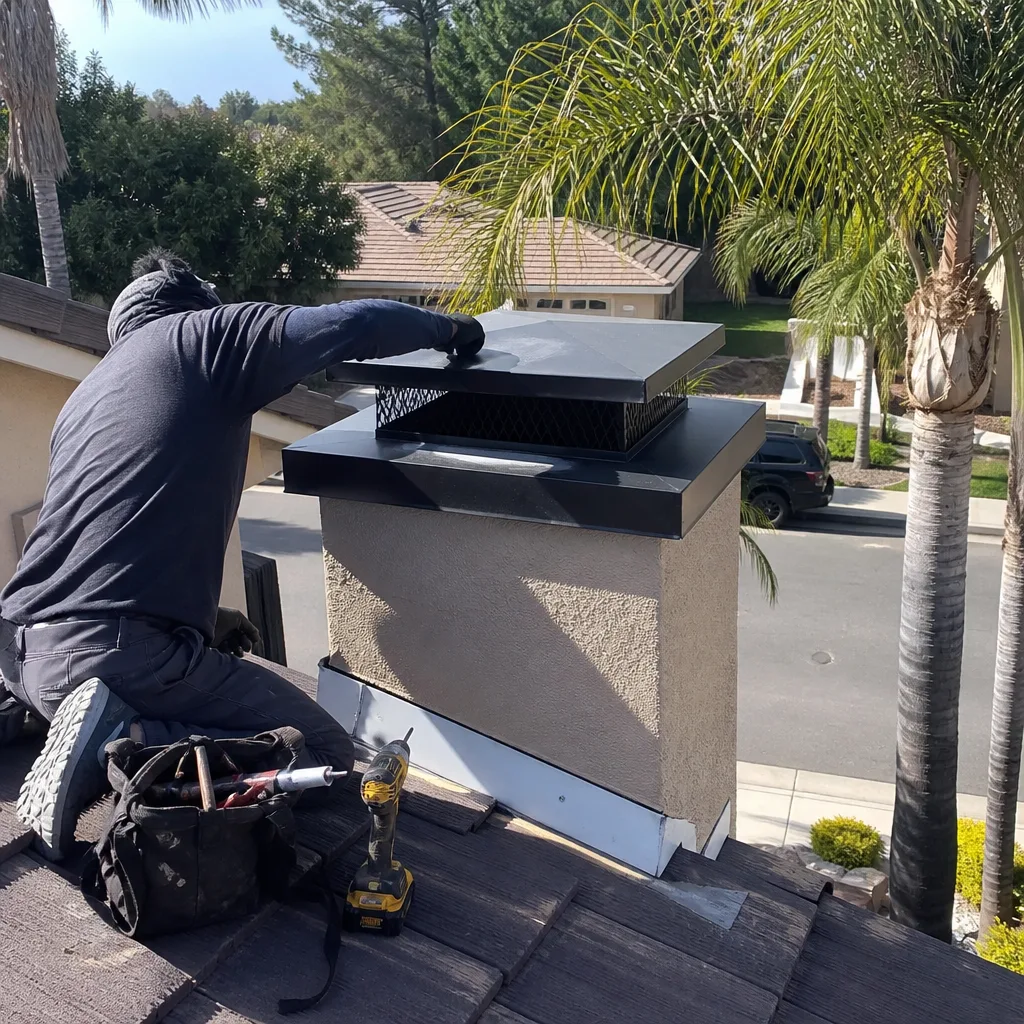
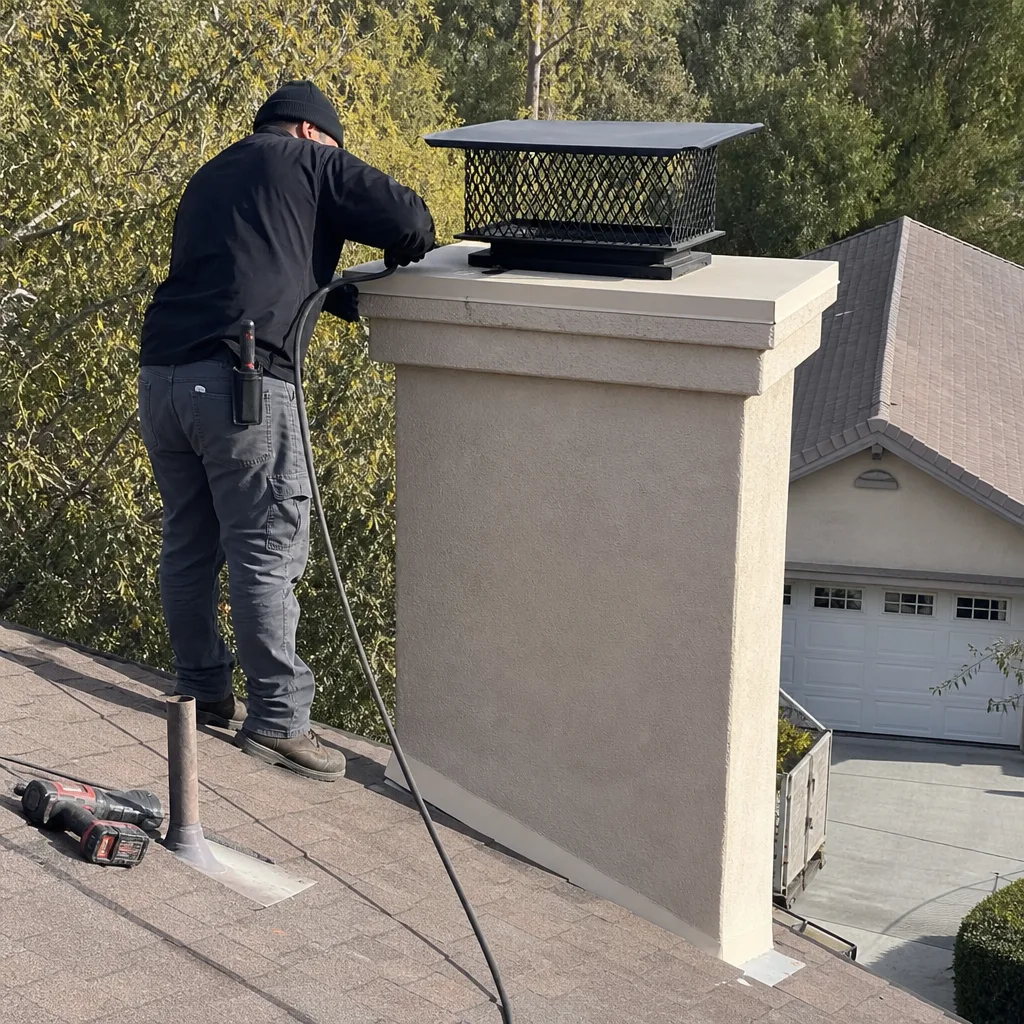
- A missing, damaged, or poorly installed chimney cap. The cap keeps rain from falling straight down the flue. Without one, every winter storm sends water down the liner and into the firebox.
- Failed flashing where the chimney meets the roof. In Santa Clarita’s stucco-and-tile roof construction, flashing failure is common and often leaks slowly for years before a ceiling stain appears somewhere below.
Efflorescence is often the earliest visible sign of all three. The white staining appears on the masonry face months or even years before the water intrusion causes structural damage, because the masonry can absorb and evaporate water for a long time before it fails. Catch it at the efflorescence stage and the fix is usually a crown repair, a cap replacement, or flashing work. Wait until the bricks begin to spall and the repair is more involved and more expensive.
If you see white staining on your chimney, photograph it, note when it appeared, and book an inspection. It will not get better on its own. It never does.
Draft Reversal Events in Santa Clarita
A draft reversal is what happens when air flows down the chimney instead of up. You smell the fireplace in the house on a warm afternoon, or you feel cold air pouring out of the firebox in January when no fire is lit. The chimney is backdrafting.
Santa Clarita’s high-desert pressure differentials make draft reversal more common here than in coastal California. Here is why. Homes in the Santa Clarita Valley sit in a basin that heats up fast during the day and cools down at night. Temperature differences between inside and outside air create pressure differences. An air-conditioned house in July is a negative-pressure zone relative to the hot outside air. Any chimney opening is a potential air inlet. If the chimney cap is damaged, the liner is cracked, or the damper does not seat fully, that negative pressure pulls air down the flue and deposits whatever is in the chimney into the living space.
That is why a house can smell like a campfire in July when no fire has been lit since February. The smell is the soot and creosote inside the flue being carried down by the reversed draft. It is not a haunted house. It is physics.
Here is what a draft reversal event tells you:
- There is air moving through the chimney when the system should be closed and sealed.
- Either the damper is not sealing, the chimney cap is damaged, or the flue has an opening that should not exist, like a crack.
- The house is under negative pressure at certain times of day, which is common in air-conditioned Santa Clarita homes but still worth understanding and managing.
Opening a window, as mentioned at the start, breaks the negative pressure temporarily and stops the smell. It does not fix the chimney. The correct response to a draft reversal event is a level 2 chimney inspection with a camera. The camera will show whether the flue is intact, whether the damper seats correctly, and whether there is a buildup that needs to be removed. After we complete a Chimney Inspection in Santa Clarita, the cause of a draft reversal is identified in writing.
Every chimney safety list mentions draft reversal signs. Few explain why they happen more often in the Santa Clarita Valley than in Santa Monica. The reason is the climate. A technician who understands local pressure dynamics will find the cause faster than one who simply recommends more ventilation.
Brown or Yellow Ceiling Stains Near a Flue Chase
A brown or yellow ceiling stain on any ceiling is a water stain until proven otherwise. When the stain is near the flue chase, the chimney chase is the first suspect. In a Santa Clarita home, the flue chase is the framed enclosure that runs through the house from the firebox to the roof. It contains the flue and is often concealed behind drywall in a living room, hallway, or upstairs bedroom.
What the stain means:
- Brown stains with a defined edge usually indicate slow, persistent water intrusion. The water is carrying tannins from framing lumber or insulation and depositing them at the drywall surface.
- Yellow stains, especially with a crystallized or chalky texture can indicate condensation. Warm, moist air inside the chase is hitting a cooler surface, condensing, and wicking through the drywall.
- Dark, spreading stains with a musty odor indicate mold growth, which means the water has been present long enough for microbial activity.
Here is what to do and what not to do. Do not call a drywall contractor first. A drywall contractor can patch the stain and match the texture, but if the chimney is still leaking, the stain returns and you have paid for a patch. Do not call a roofer first either, unless you can see an obvious roof leak from inside the attic. Many roofers will recaulk and reseal around the chimney and call it done, which sometimes fixes the issue and sometimes does not.
Call a chimney company first, because the most common causes of chase-adjacent staining are chimney-specific: failed chase flashing, a cracked chase crown, a damaged chimney cap, or a failed liner allowing condensation inside the chase. The chimney company can camera the flue, inspect the chase from the roof, and write a cause-and-condition report that names the problem. Then, if a drywall repair or roof work is needed afterward, the right contractor gets called with a known cause.
We have been to Santa Clarita homes where a homeowner paid for a ceiling patch three times before calling us. The third patch lasted exactly as long as the first two, because nobody had fixed the chase flashing above it.
Creosote Buildup: What It Is and Why It Matters
Creosote is the flammable residue that condenses inside a chimney when wood smoke cools against the flue walls. It forms in three stages. Stage one is a flaky, soot-like deposit. Stage two is a granular, crunchy texture. Stage three is a hardened, glossy glaze that looks like tar and is highly flammable. None of the three is safe to leave, but stage three creosote is the one that fuels chimney fires.
The threshold question is not whether a chimney has creosote. Every wood-burning chimney has some. The question is how thick the buildup is and what stage it has reached. The National Fire Protection Association sets the standard used by most chimney professionals: when creosote reaches 1/8 inch in thickness, the chimney should be swept before further use. That is about the thickness of two stacked pennies. You cannot see 1/8 inch of creosote from the firebox. You have to either camera the flue or sweep and measure what comes out.
What accelerates creosote buildup in Santa Clarita:
- Burning green or unseasoned wood. Wood with high moisture content burns cooler, produces more smoke, and deposits more creosote.
- Restricted air supply. A closed-door insert with the air control on low produces a cool, smoldering fire and heavy creosote.
- Oversized flues. A flue larger than the fireplace or stove needs lets exhaust cool too quickly, which accelerates creosote condensation.
Santa Clarita homeowners who burn in winter and then let the fireplace sit all summer should know that creosote left in the flue over the hot, dry summer does not go away. It hardens. Stage two becomes stage three faster in dry heat. When the first fire of autumn lights, the glazed creosote is at its most ignitable.
A standard Chimney Sweep in Santa Clarita removes stage one and stage two creosote with rotary brushes and rods. Stage three glazed creosote is a different job; it typically requires chemical treatment or specialized mechanical removal, and the cost is higher. This is why the annual sweep before burning season is cheaper than the emergency call after a chimney fire. A standard chimney sweep in Santa Clarita typically runs $189 to $349 depending on the fireplace type, any added insert or stove connections, and the amount of buildup.
What a Chimney Sweep and Inspection Cost in Santa Clarita
You should know the ballpark before you call. A standard chimney sweep in Santa Clarita typically runs $189 to $349. That price covers the sweep itself, the equipment setup, and the cleanup. If a chimney has been ignored for a decade and has stage three creosote, the price can exceed that range because the job is no longer standard.
A level 1 chimney inspection, which is the visual check that accompanies most sweeps, is typically included in the sweep price. A level 2 inspection, which includes the camera, is typically $149 to $249 when booked as an add-on, and it is the one you need when a warning sign is present. A level 2 inspection is also the standard for real estate transactions and for any chimney that has had a change in fuel source, a new appliance, or a chimney fire.
Here is a breakdown of typical chimney service costs in the Santa Clarita market:
- Standard chimney sweep: $189 – $349, depending on fireplace type and buildup level.
- Level 1 inspection (visual): Often included with sweep; $99 – $149 if booked alone.
- Level 2 inspection (with camera): $149 – $249 as an add-on; $249 – $399 if booked alone.
- Chimney cap replacement (standard stainless): $180 – $450 installed, depending on flue size and cap type.
- Crown repair or reseal: $400 – $1,200, depending on crack severity and whether rebuilding is required.
- Flue relining (replacing the inner liner that channels smoke safely out of the house): $2,800 – $7,500, depending on flue height, liner material, and access difficulty. Products like DuraFlex stainless liners are common in relining work and are available in a range of specifications.
Flint Chimney Co Santa Clarita puts a written price in front of every customer before any tool comes off the truck. The number on the invoice is the number you approved. No price changes at the door, no add-ons discovered mid-job. That applies to every sweep, every inspection, and every repair. If a repair is recommended, the written quote includes the brand of material specified, such as a Chimney Repair in Santa Clarita using Olympia Chimney caps or HeatShield resurfacing products.
For an exact quote on a Santa Clarita chimney, call (661) 430-6125. The estimate is free.
Common Mistakes to Avoid
- Opening a window to fix a draft reversal and calling it done. This breaks the negative pressure temporarily. It does not fix the damaged cap, cracked liner, or failed damper that caused the reversal. The chimney still has the problem, and it will return every time the pressure differential returns.
- Treating efflorescence as a cosmetic stain. Scrubbing the white powder off the brick face without finding the water source is like mopping a floor while the pipe above it still leaks. The stain returns because the water is still moving through the masonry.
- Calling a roofer before a chimney company for a ceiling stain near the flue chase. Roofers often recaulk and reseal the roofline, which sometimes fixes the issue. When the leak is in the chase itself, the stain comes back and the homeowner has paid for the wrong repair.
- Accepting a liner replacement quote without seeing camera footage. A cracked liner is invisible from both ends of the chimney. If a company quotes a $5,000 relining job without showing you the camera image of the crack, you are buying blind.
- Burning the first fire of autumn without a sweep after a year of sitting idle. Creosote hardens in Santa Clarita’s dry summer heat. The first fire of the season is the most likely time for a chimney fire, because the flue has not been cleaned and the creosote is at its most flammable.
- Relying on a carbon monoxide detector to catch a chimney leak. CO detectors are important and required by California law, but a detector in a hallway does not necessarily catch CO moving through a wall cavity into a specific room. The detector is a backup. The camera inspection is the primary diagnostic.
- Booking a sweep without asking about the cause-and-condition report. A sweep without a written report tells you the chimney is cleaner but not whether it is safe. The report is what documents the condition and what was found.
See the difference
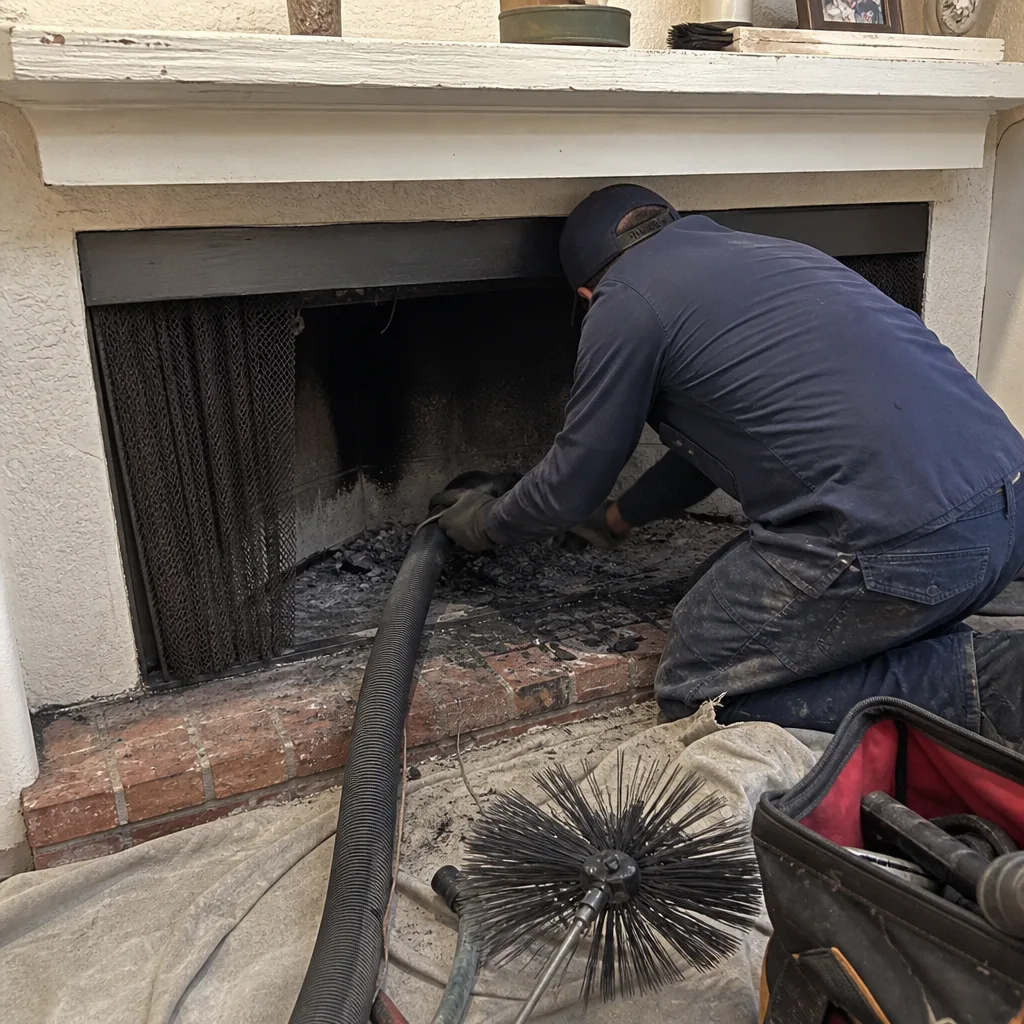 Before
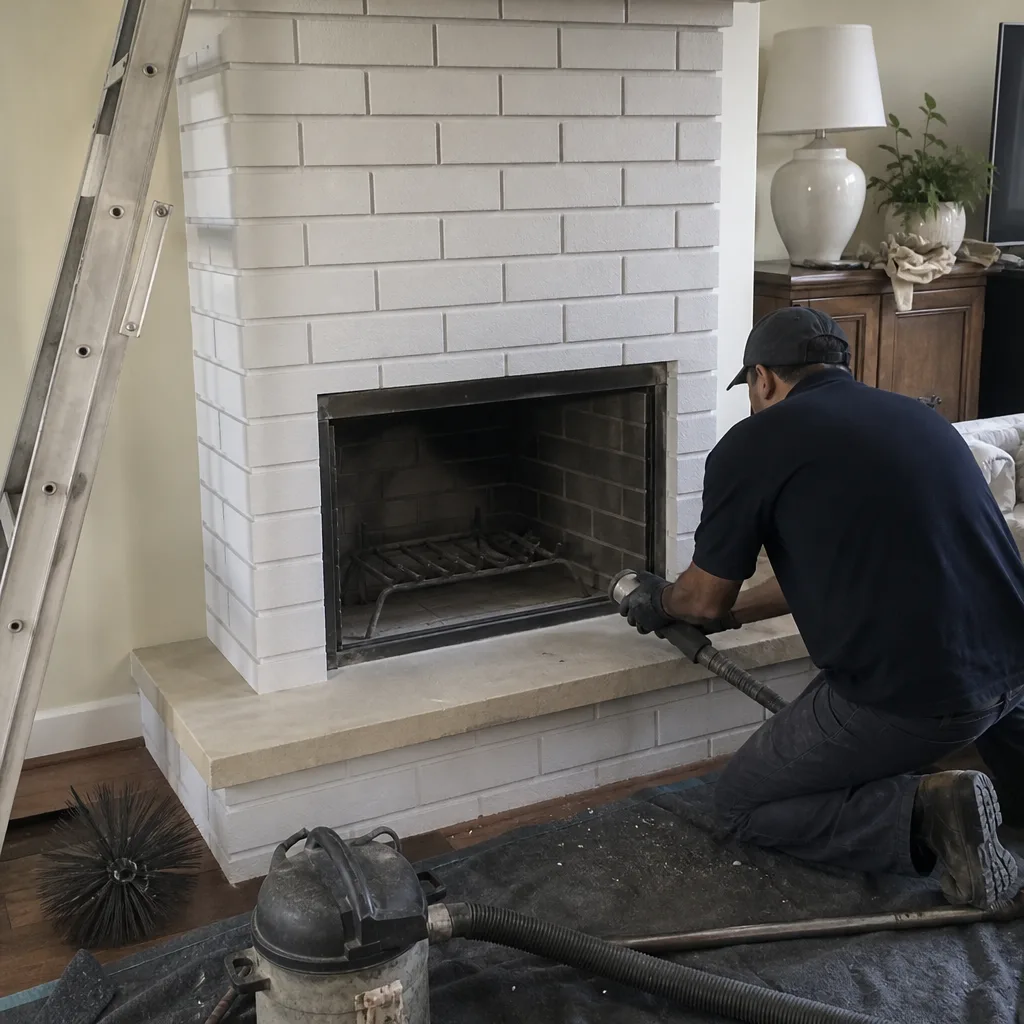 After
After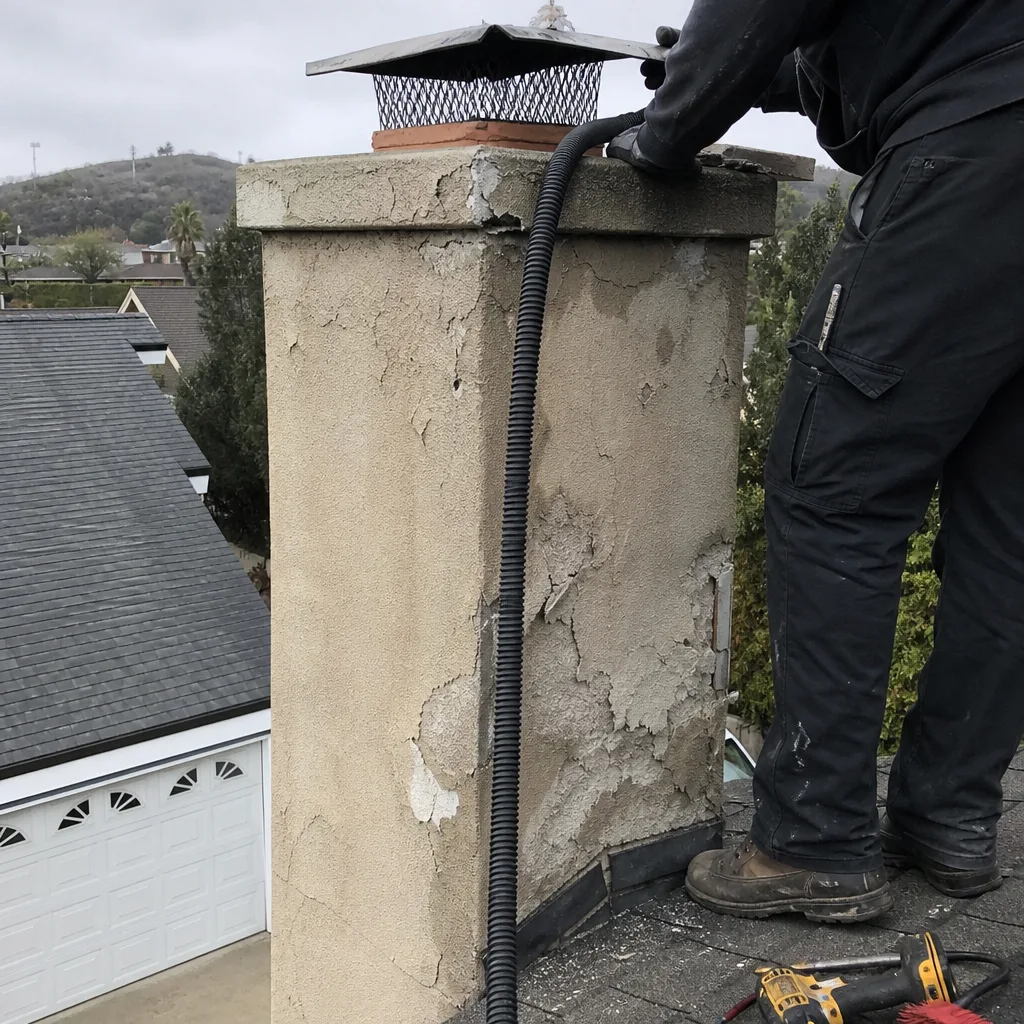 Before
 After
After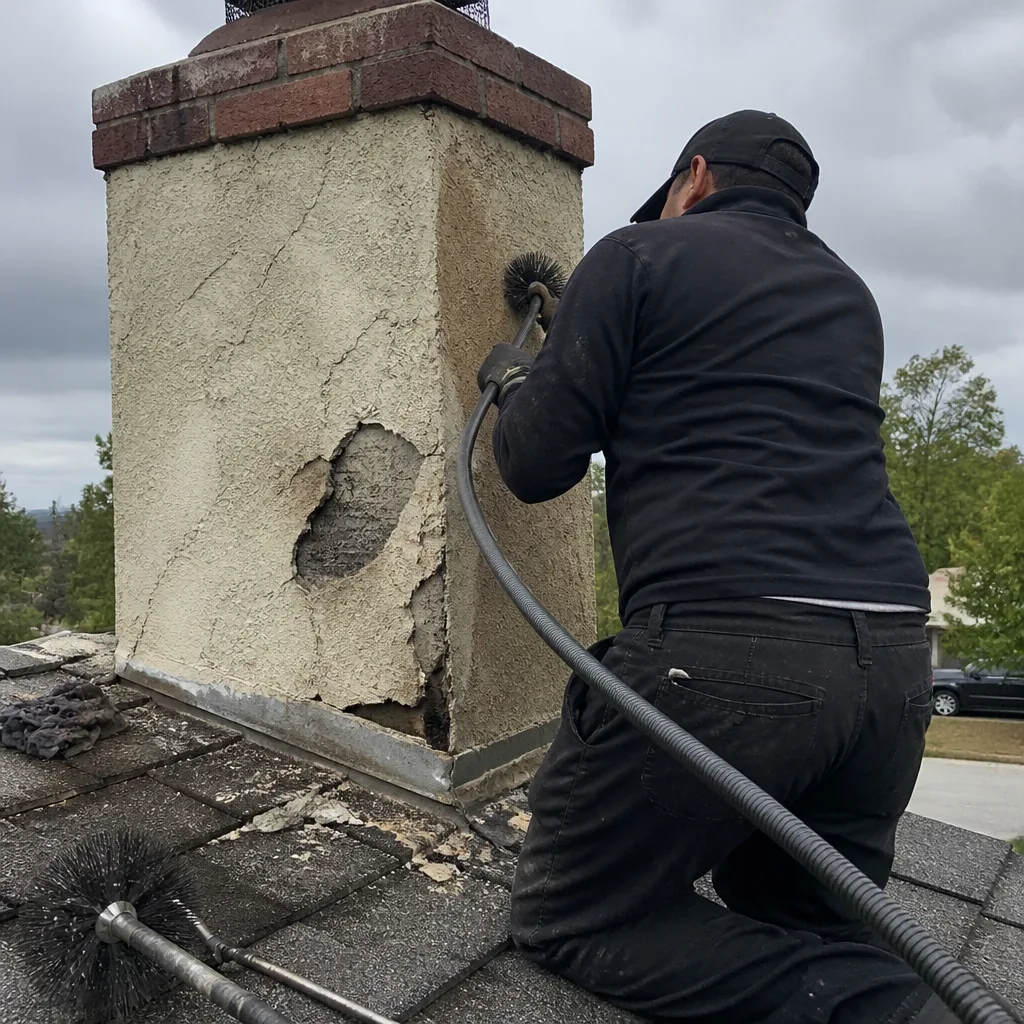 Before
 After
AfterWhen to Call a Professional
Call a chimney professional when you see white mineral staining on exterior masonry, rust on the damper or firebox, flaky tile pieces in the firebox, or water stains near the flue chase. Call when you smell the fireplace in warm weather, when smoke pushes into the room instead of up the flue, or when you have not had the chimney swept in two or more burning seasons. Call when you are buying or selling a home and the inspection report flags the chimney as unknown condition. Call before the first fire of autumn if the chimney has sat unused since spring. Flint Chimney Co Santa Clarita offers free estimates in Santa Clarita, call (661) 430-6125, and every job gets a written price before the work begins.
Frequently Asked Questions
A standard chimney sweep in Santa Clarita typically runs $189 to $349, and the exact price is quoted in writing before the work starts. Homes with heavy creosote buildup, stage three glazing, or multiple flues connected to the fireplace may fall above that range. Call (661) 430-6125 for an exact quote, the estimate is free.
That depends entirely on the camera inspection. A firebox can look spotless while the flue tiles above the smoke chamber are cracked, shifted, or missing mortar joints. The only way to know is a level 2 inspection with a camera, and you should always see the footage before accepting any relining recommendation. A crack in the flue liner is a carbon monoxide risk that no visual check from below can rule out.
The National Fire Protection Association recommends sweeping a chimney when creosote reaches 1/8 inch in thickness, but no part of the industry recommends going more than one burning season between sweeps. For Santa Clarita homeowners, that means a sweep once a year if the fireplace is used regularly, and a camera inspection any time a warning sign is present. The sweep clears the creosote; the inspection tells you whether the chimney is safe.
Creosote accumulates, hardens, and becomes more flammable. A chimney fire can crack flue tiles, damage the chimney chase, and in worst cases spread into the attic. Separately, a cracked liner that goes undetected because no camera inspection was ever done can allow carbon monoxide into living spaces. No smell, no smoke, no warning. That part is not a scare tactic; carbon monoxide is genuinely undetectable without an instrument.
That is a draft reversal event. Santa Clarita’s air-conditioned homes are under negative pressure in warm weather, which pulls air down the chimney and into the house. The smell is soot and creosote from inside the flue being carried backward through the home. Opening a window breaks the pressure temporarily. The proper fix is a chimney inspection to identify what is letting the air move through the system, which often traces to a damaged cap, a leaking damper, or a cracked liner.
A proper cause-and-condition report includes the flue condition, chimney cap and crown condition, damper function, creosote buildup level and stage, any water intrusion evidence, and any recommended repairs with the specified material. The report should be written and you should keep it. It is the same documentation standard used in real estate disclosures, and it protects you if you ever sell the home and a buyer asks about the chimney.
The Bottom Line
Most chimney warning signs are visible to a homeowner for months or years before they become dangerous. White mineral staining, rust, cracked mortar, warm-weather fireplace odors, and ceiling stains near the flue chase are all signs that the chimney is degrading. The dangerous exception is a cracked liner, which has no visible sign and no smell. That is what the camera inspection catches. If you have seen any warning sign on this page, get a written cause-and-condition report, not a guess. A sweep without documentation just makes the chimney cleaner. A written inspection makes it known.
Written by Hank Delano, Owner at Flint Chimney Co Santa Clarita, serving Santa Clarita since 2002.