
Last updated October 15, 2026
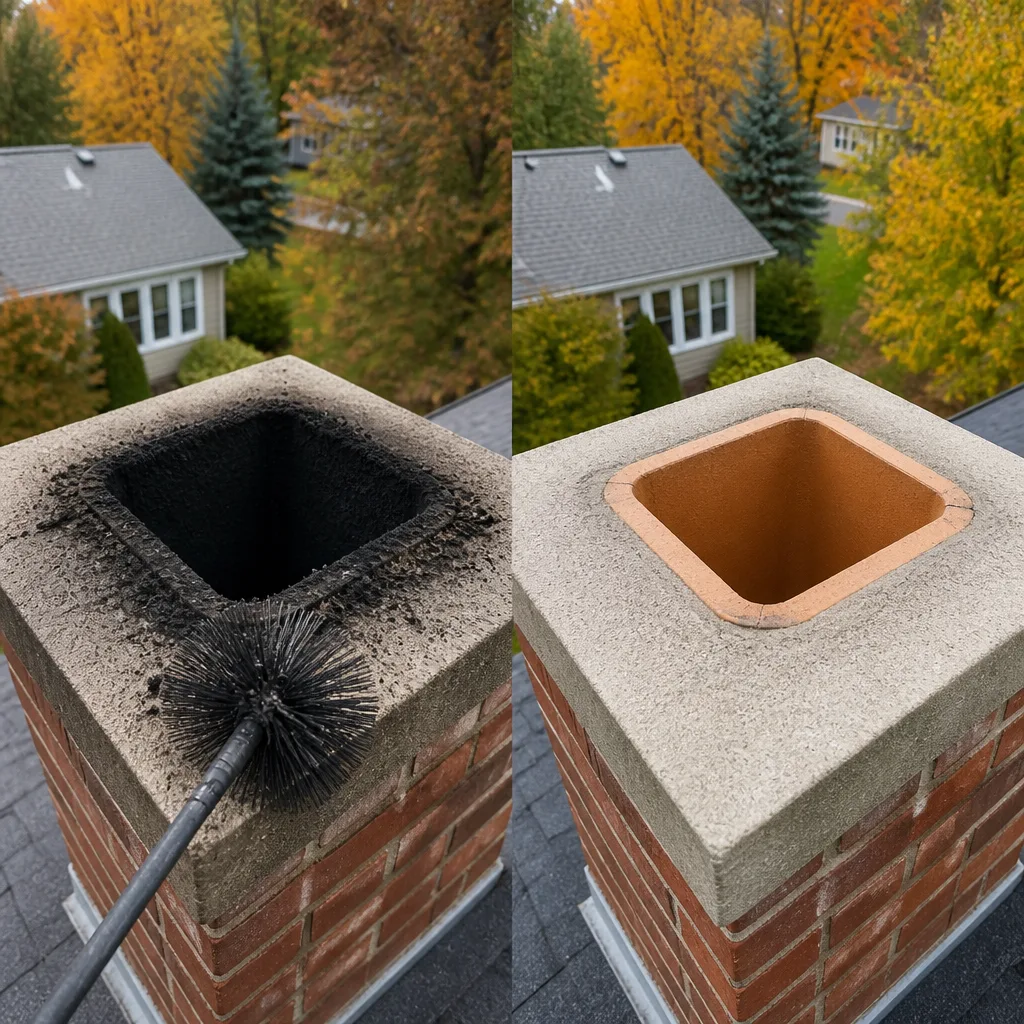 Sweep & inspection
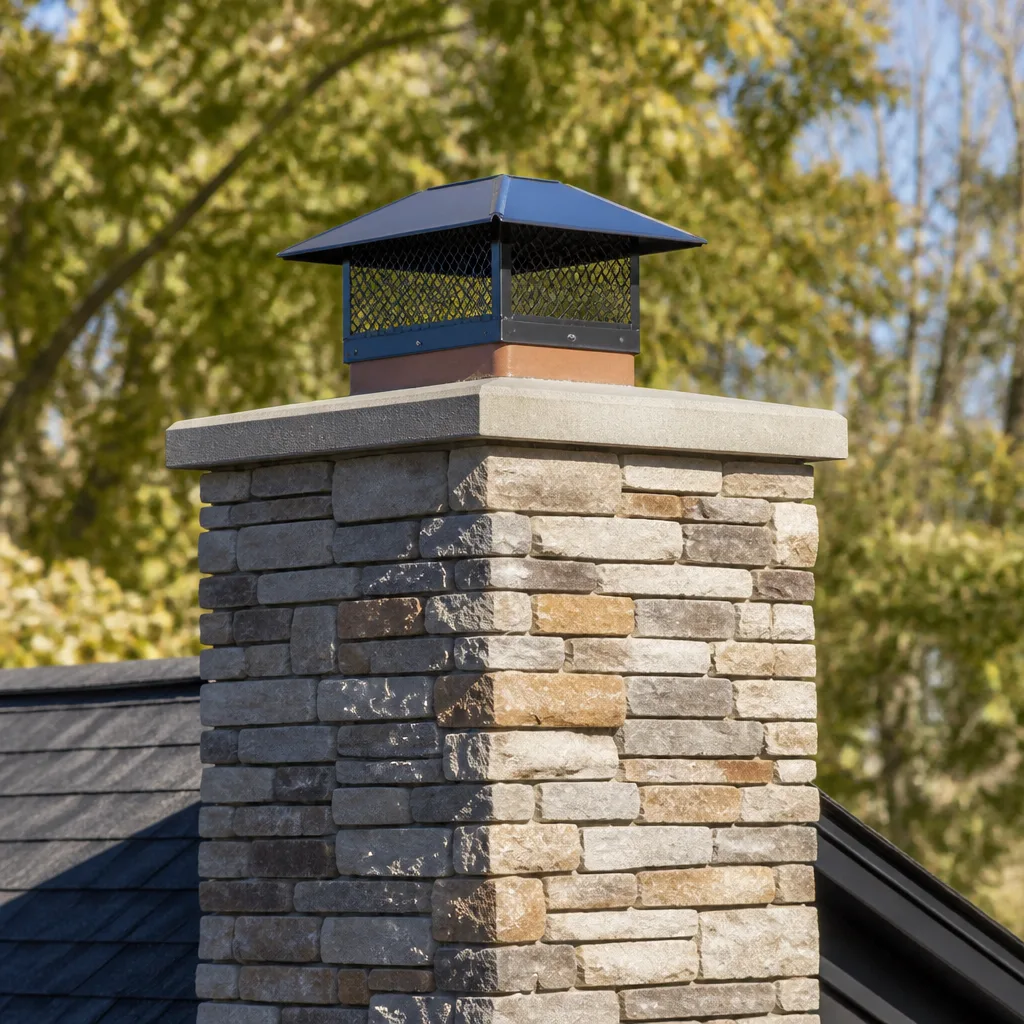 Caps & crowns
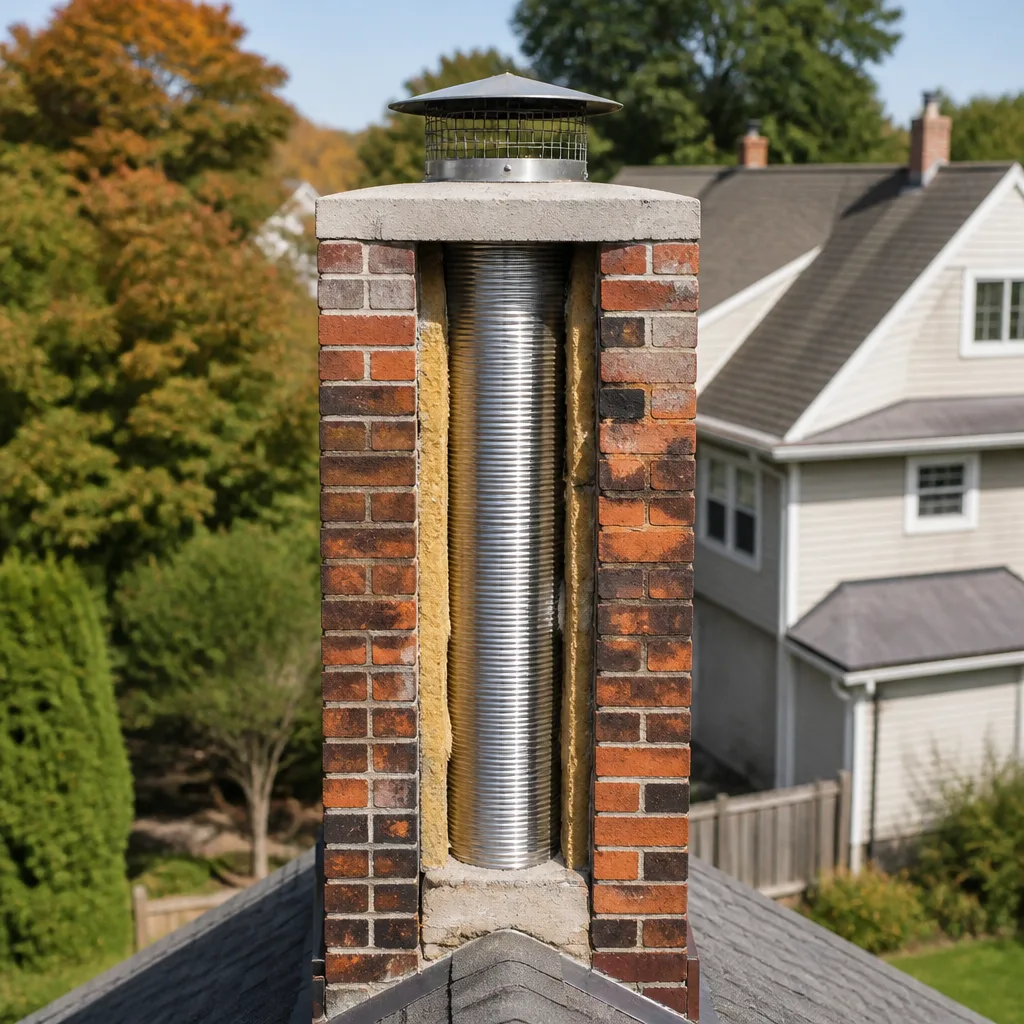 Flue relining
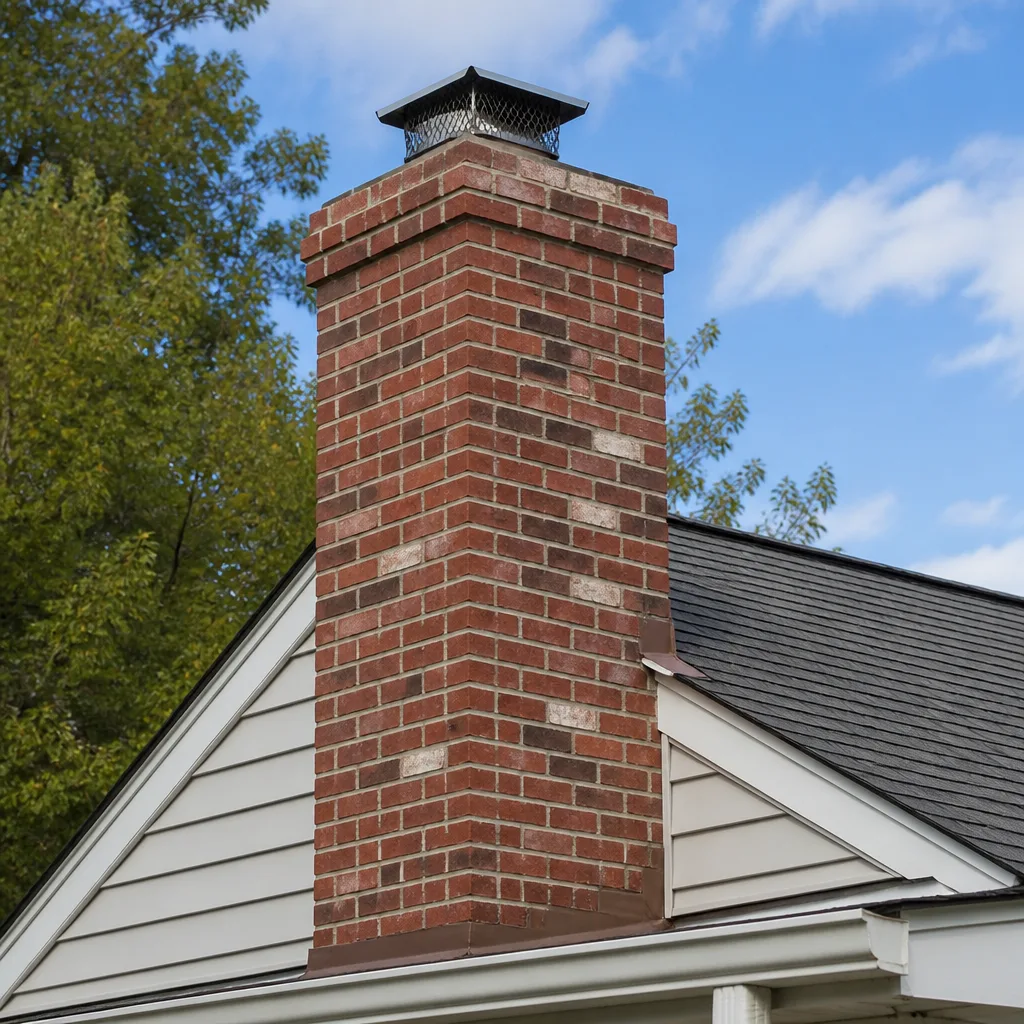 Masonry repair
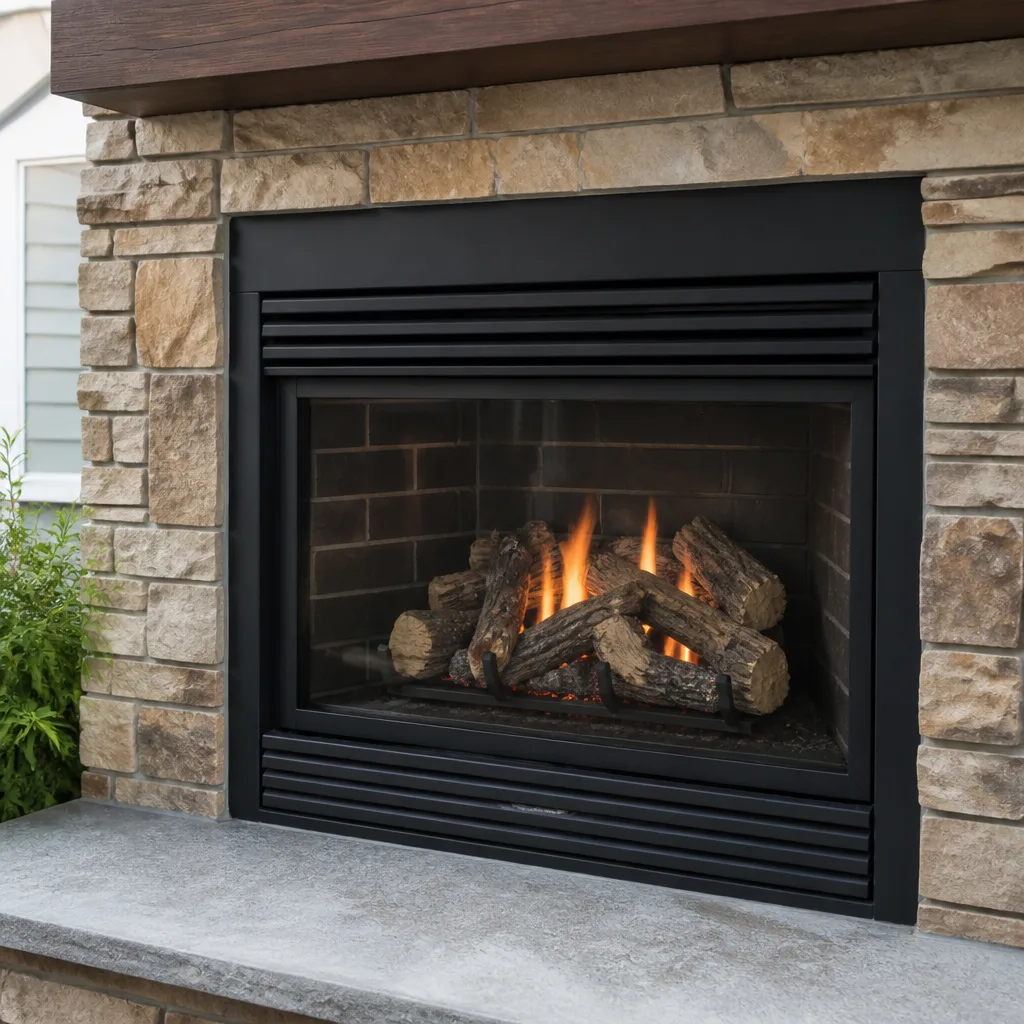 Gas fireplace service
Level 1 sweep and inspection to the NFPA 211 annual standard - flue, crown, cap, and flashing checked and photographed
Chimney sweep logs do not sweep chimneys. They loosen some creosote - which then falls where a brush and vacuum still have to collect it.
How to Hire a Chimney Cleaning Contractor in Santa Clarita: A Step-by-Step Guide
Every October, when the first cold snap rolls down the Santa Clarita Valley, the same thing happens: unlicensed chimney “contractors” appear in neighborhoods across Valencia, Canyon Country, Saugus, and Newhall, knocking on doors and offering $49 cleanings. The Los Angeles County area has documented cases of these operators arriving with a shop vac, running it near the firebox for 20 minutes, and leaving with $300 in cash. The tell is almost always the same: they cannot produce a written estimate before they start. This guide is not a pep talk about why chimneys matter. It is a vetting framework: exactly which documents to demand, how to verify them, and the specific red flags that show up in Santa Clarita every fall.
Quick Answer
To hire a chimney cleaning contractor in Santa Clarita, you need three documents before anyone enters your home: a written estimate, a certificate of liability insurance, and a CSIA certification number you can verify yourself. A standard chimney sweep in Santa Clarita typically runs $175 to $300-see our Chimney Cleaning Cost Breakdown: The Santa Clarita Homeowner’s Reference for 2026 for full details-and the entire process, from initial call to completed cleaning, should take less than a week. If a contractor can’t produce all three documents within a few minutes of being asked, end the conversation.
Styles & brands we work with
Table of Contents
- The Three Documents Every Legitimate Chimney Contractor Must Produce
- How to Verify a CSIA Certification in Under Two Minutes
- What a Written Scope of Work Must Contain to Be Enforceable
- Comparing Two Bids When Prices Differ by $150
- Door-to-Door Solicitation: The Red Flags That Spike in Santa Clarita Each October
- Liability Insurance: What to Actually Look For
- The Full Hiring Process, Step by Step
The Three Documents Every Legitimate Chimney Contractor Must Produce
Most of the risk in hiring a chimney contractor disappears the moment you demand documentation. In our experience serving Santa Clarita since 2002, the difference between a professional operation and a fly-by-night crew is rarely visible at the truck. It is visible on paper, before the truck arrives at your home.
Here are the three documents every legitimate chimney contractor should hand over without hesitation, and what each one actually proves:
- Written estimate. This is not a verbal quote. It is a printed or emailed document that lists the specific work to be performed, the exact price, and the name of the company performing the work. A contractor who will not produce a written estimate before starting is not operating as a business; they are operating as a transaction between two strangers with no record. The written estimate is your leverage if anything goes wrong.
- Certificate of liability insurance. This is a document from the contractor’s insurance provider, not from the contractor. It names the policyholder, lists the coverage limits, and includes a policy number. Damage to your home during a chimney sweep is rare, but it happens: a dropped brush can crack a tile surround, and a careless boot can scar a hardwood floor. If the contractor has no liability insurance, that damage is your problem to pay for.
- CSIA certification number. The Chimney Safety Institute of America maintains a public database of certified sweeps. A CSIA number is not a license, and it is not issued by the state. It is proof that the person completed the only nationally recognized credentialing program in the chimney trade. You can verify the number yourself in about two minutes, which we cover in the next section.
A legitimate company will produce all three documents before you even ask. At Flint Chimney Co Santa Clarita home, the written estimate requirement is non-negotiable and applies to every service call, no exceptions. If a contractor balks at any of the three, the risk calculation changes: you are being asked to trust someone who has not demonstrated they can be trusted.
How to Verify a CSIA Certification in Under Two Minutes
Here is the exact process we recommend to every Santa Clarita homeowner, and it takes less time than checking the weather:
- Ask the contractor for their CSIA certification number. Write it down, or ask them to text it to you.
- Go to the CSIA website and open the certification directory. It is called “Find a Certified Sweep.”
- Enter the number. The database will show the name of the certified individual, their certification status, and the certification’s expiration date.
- Compare that name to the person standing in front of you. If the names do not match, or if the certification has lapsed, ask why.
What the database actually shows is straightforward: it lists who is certified, when they earned the certification, and whether the certification is current. It does not show complaint history, and it does not guarantee workmanship. What it does guarantee is that the person completed a structured training program covering chimney codes, clearances, and fire safety, and that they are licensed to use the CSIA credential.
In the Santa Clarita market, we see a specific pattern each fall: solicitors who carry a tattered CSIA card that belonged to someone else, or a card that expired three years ago. The database check exists to eliminate exactly that scenario. It is not rude to check. A professional will wait while you do it.
What a Written Scope of Work Must Contain to Be Enforceable
The difference between a useful estimate and a useless one comes down to specificity. A paragraph describing “a complete chimney cleaning and inspection of all related components” is not a scope of work. It is a description. An enforceable scope of work uses line items, because line items create accountability.
A proper written scope of work for a chimney sweep in Santa Clarita should contain:
- The specific service being performed. “Sweep flue and firebox” is specific. “Clean chimney” is not.
- The exact number of flues to be swept. Many Santa Clarita homes have two flues, one for a fireplace and one for a furnace or water heater. The estimate must state whether both are included.
- Removal and disposal of debris. Soot and creosote removed from the flue must be placed in sealed bags that leave the property. The estimate should state this explicitly.
- The level of inspection included. The CSIA recognizes three levels of inspection. A sweep typically includes a Level 1 or Level 2 inspection. The scope must say which level, because that determines what the technician will actually look at.
- The exact price. The number on the estimate is the number on the invoice. If the scope says $225, then the invoice says $225.
- Materials listed by name, if repairs are included. If a repair is part of the work, the scope should name the specific product being installed. We specify materials by job, which is why our estimates list brands like DuraFlex and HeatShield when a repair is part of the scope.
When a contractor refuses to break the work into line items, the reason is usually simple: vagueness leaves room to move the price at the door. Line items remove that room. A written scope, delivered before any work starts, is what keeps the invoice from surprising you.
Comparing Two Bids When Prices Differ by $150
In Santa Clarita, a standard chimney sweep typically runs $175 to $300. If you receive one bid at $179 and another at $329, the gap is not automatically a rip-off, and it is not automatically a signal that the cheaper contractor is skipping something. Here is what the gap usually reflects.
The cheapest reasonable sweep is around $175. At that price, the technician will sweep one flue, remove visible debris from the firebox and smoke shelf, and complete a Level 1 visual inspection of the accessible portions of the chimney. The job takes 45 to 90 minutes. This is a legitimate price for a straightforward sweep of a chimney in good condition.
The higher bid often includes something the lower bid does not. The most common difference is inspection depth. A Level 2 inspection, recommended whenever the home has changed hands or the chimney has gone uncleaned for several years, involves a camera scan of the flue interior. A camera inspection adds $75 to $150 to the bill because it requires specialized equipment and more time. The higher bid may also include two flues instead of one, or animal removal, or a heavy creosote buildup surcharge.
The question to ask is not “Why is this one more expensive?” It is “What is included in this quote that is not included in the other one?” A written estimate answers that question before you ask it. If a contractor cannot tell you, line item by line item, what drives the price difference, that is a contractor you do not want to hire, regardless of which direction the price gap runs.
Cheaper becomes a signal to walk away in one specific scenario: the price is dramatically below market, the contractor offers no written scope, and the only emphasis is on urgency. A $89 sweep that arrives with a shop vac and no paperwork will cost more than a $250 sweep from a licensed professional, because you will eventually pay someone else to redo the work.
Door-to-Door Solicitation: The Red Flags That Spike in Santa Clarita Each October
Every fall, as consistently as the Santa Ana winds, door-to-door chimney solicitors move through the Santa Clarita Valley. They concentrate on the older neighborhoods first: Saugus, Canyon Country, and parts of Newhall, where chimneys are more likely to have been in use for 20 or 30 years without a cleaning. The solicitation pattern is consistent enough that we can describe it exactly.
The pitch usually involves a “neighborhood special” rate, a stated price without a written scope, and a claim that they are “already in the area.” Here are the specific red flags we tell Santa Clarita homeowners to watch for:
- No written estimate before work begins. This is the single strongest predictor of trouble. A contractor who will not put the price and scope in writing before starting has decided the record is a risk to them, not to you.
- Cash-only pricing. A business with employees, insurance, and an address takes checks, cards, and electronic payment. Cash-only is not a business preference; it is an off-the-books signal.
- No visible company identification. An unmarked truck and a technician without a uniform or ID badge is a person, not a company. You cannot hold a person accountable the way you can hold a licensed and insured operation accountable.
- Claims of urgent repairs discovered on a cold call. The solicitor does a 20-minute “cleaning” and then shows you a picture of a cracked flue tile that was, they claim, seconds from burning your house down. The repair quote is $3,400, and they can do it right now. The scenario is a script.
- High-pressure scheduling. “The deal is only available if we do it today.” A real contractor has a schedule; a scam operator has a quota.
The October spike exists because the first cold nights drive homeowners to think about their fireplaces for the first time since spring. That urgency is normal. But hiring a chimney sweep in Santa Clarita does not need to be done on the same day someone knocks on your door. A professional company books a day or a week out. There is no legitimate reason to rush.
Liability Insurance: What to Actually Look For
Requesting a certificate of liability insurance is a two-minute conversation with any legitimate contractor. It should not be awkward. The contractor asks their insurance agent to email you a certificate, and the agent does it. That is the whole process.
When you receive the certificate, look for three things:
- The contractor’s name as the named insured. If the certificate names a different company than the one on the estimate, ask why.
- Coverage limits of at least $500,000 for general liability. $1 million is common and better. The specific number matters less than the existence of a policy in the first place.
- A policy that is currently active. Check the expiration date. A policy that lapsed in March is not coverage.
Liability insurance protects your home against damage caused during the work: a dropped brush cracking a fireplace tile, a tracking soot stain across a light carpet, a ladder scraped against a stucco wall. These things happen rarely, but when they do, the cost of repair without insurance is yours. With insurance, it is the contractor’s.
A note on worker’s compensation: a legitimate chimney company with employees carries workers’ compensation coverage, and if someone is injured on your property, that policy protects you from a lawsuit. An uninsured subcontractor working alone has no such safety net. You do not need to become an expert in insurance law. You need to confirm the certificate exists and is current. A professional company will treat the request as routine, because it is.
The Full Hiring Process, Step by Step
Here is the entire process of hiring a chimney cleaning contractor in Santa Clarita, from first contact to completed work, in nine steps:
- Make a list of two or three companies. Start with Chimney Sweep in Santa Clarita and add any other licensed local operations. Two or three bids are enough to establish the market price range.
- Call each company. Ask for a written estimate. A live person answering the phone is a good sign; a voicemail tree is a mild warning flag. Note how you are treated on the call, because that is a preview of how you will be treated during the work.
- Request the three documents. Written estimate, certificate of liability insurance, CSIA certification number. No exceptions.
- Verify the CSIA number in the database. Two minutes. Confirm the name matches the person who will actually do the work.
- Compare written scopes line item by line item. Same service, same number of flues, same inspection level. If the scopes are not comparable, ask the more expensive contractor what their scope includes that the cheaper one does not.
- Read the scope for material names. If a repair is being quoted, look for specific product names. We specify brands like HeatShield and DuraFlex in our estimates so you can verify quality independently.
- Book the job. Choose the contractor and schedule a date. A professional will give you a window and keep it.
- Do not pay in full upfront. A deposit may be reasonable for large repairs, but a standard sweep does not require prepayment. Anyone asking for full payment before starting a $250 cleaning is not someone you want inside your home.
- After the work, check the invoices against the estimate. The number on the invoice should match the number on the estimate. If it does not, the contractor owes you an explanation, in writing, of what changed.
In our experience, the entire process takes four to five days from first call to completed sweep. It is not a long process, and it is not a complicated one. It is a disciplined process, and discipline is what the industry too often lacks.
Common Mistakes to Avoid
- Hiring a door-to-door solicitor without doing due diligence. The October solicitation spike in Santa Clarita is real, and the script is designed to create urgency. A professional company books appointments; it does not work neighborhoods off a truck.
- Accepting a verbal quote as binding. A verbal quote is not a contract. It is a number someone said out loud. If it is not written, it does not exist as far as your leverage is concerned.
- Skipping the CSIA verification. Two minutes of checking a database eliminates the most common credential fraud. The database is free and public. Use it.
- Comparing bids by price alone. A $179 bid and a $329 bid often describe two different scopes of work. The only way to compare them is line item by line item.
- Believing the “neighborhood special” extends to repairs. The classic door-to-door pattern is a cheap cleaning followed by a terrifying “discovery” of an urgent repair. The repair quote is invented, and the urgency is manufactured.
- Ignoring the chimney smell as “normal.” A musty or smoky odor from the firebox in humid weather, common in parts of Canyon Country and Newhall, often signals creosote buildup or a leak. A professional inspection answers the question; ignoring it does not.
- Assuming insurance is automatic. The state does not require chimney sweeps to carry liability insurance. You have to require it.
See the difference
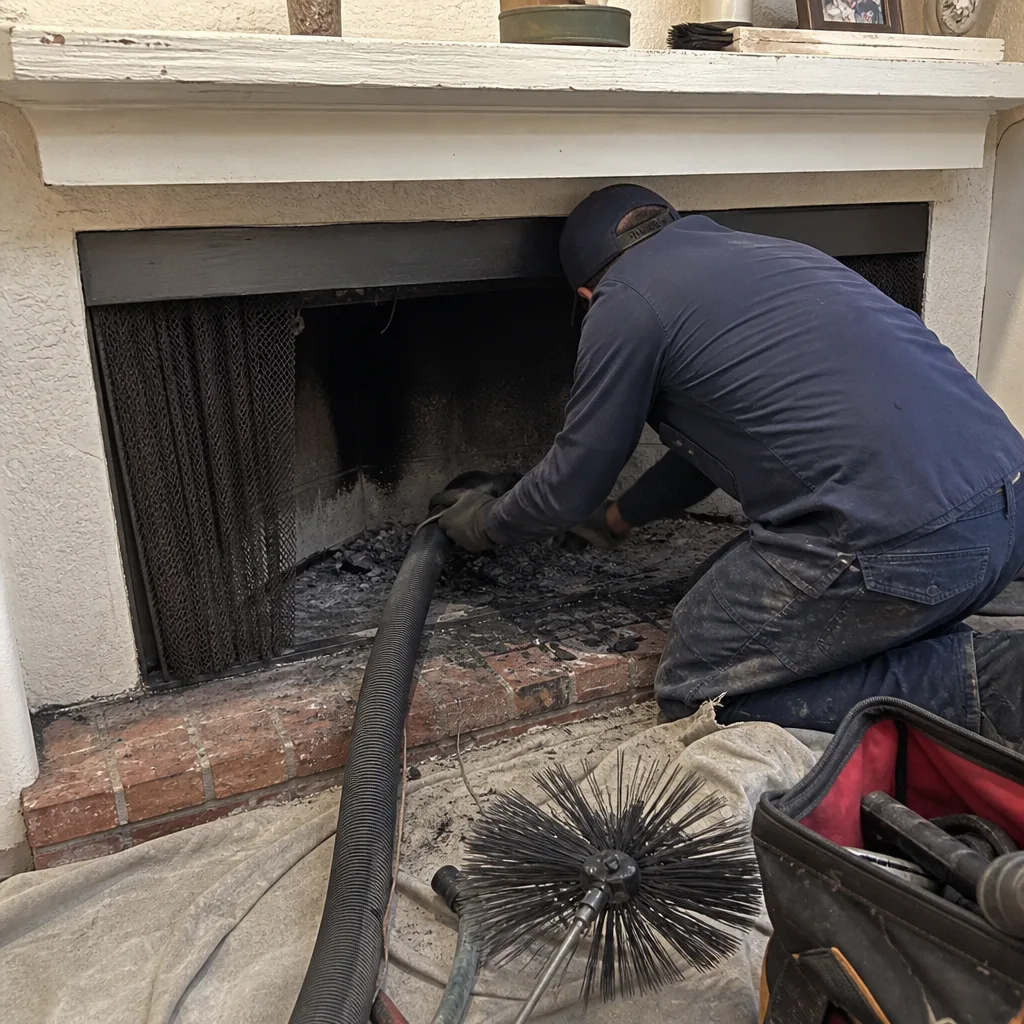 Before
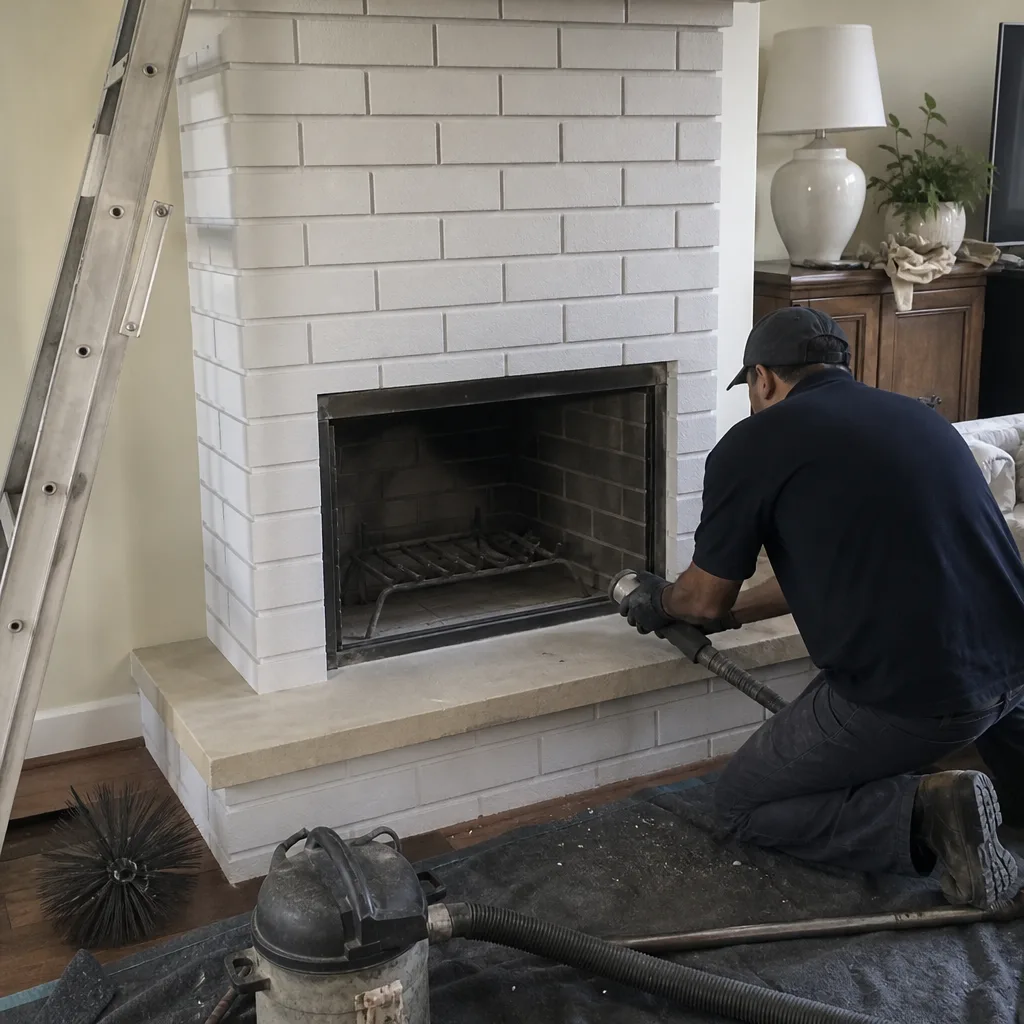 After
After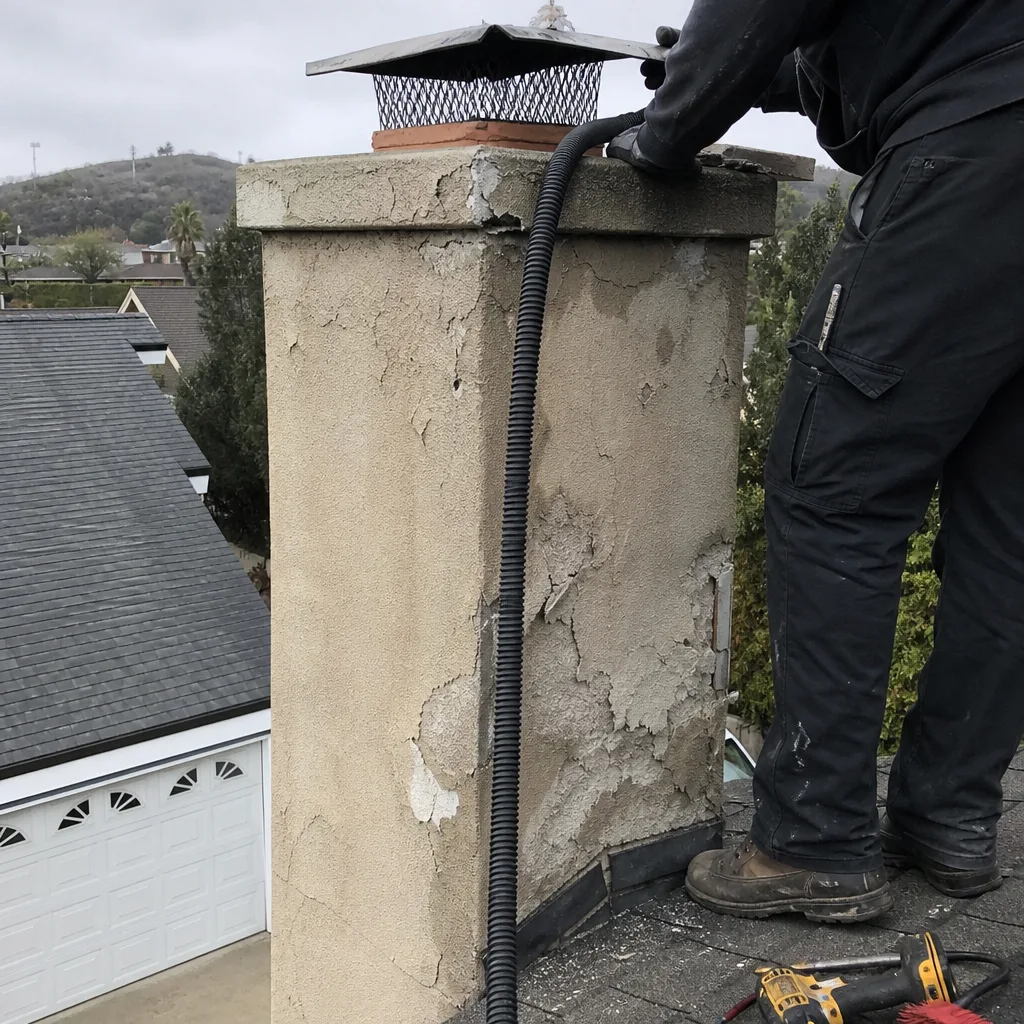 Before
 After
After Before
 After
AfterWhen to Call a Professional
Call a professional if you have not had your chimney swept in two or more years, if you notice a strong smoky odor even when the fireplace is not in use, if you see flakes of creosote or dark staining around the firebox, if birds or animals have been in the chimney, or if you recently purchased your Santa Clarita home and have no record of the last cleaning. Also call a professional before burning your first fire of the season, because creosote that was harmless in May can be dangerous in November once the drying Santa Anas arrive. Flint Chimney Co Santa Clarita offers free estimates in Santa Clarita, call (661) 430-6125 and a live person will answer.
Frequently Asked Questions
A standard chimney sweep in Santa Clarita typically costs between $175 and $300 for one flue. The price increases if you have two flues, if a camera inspection is added, or if the creosote buildup is heavy enough to require additional labor. Always get the exact number in writing before booking, and call (661) 430-6125 for a free written estimate.
The CSIA recommends sweeping whenever creosote buildup reaches one-eighth of an inch, which for most Santa Clarita homes that burn wood regularly translates to once per year. Homes that burn only occasional fires may be able to go two years between cleanings. If you burn soft woods like pine, or if the chimney is short and the fires tend to smolder, you may need sweeping more often.
Creosote is the tar-like residue that condenses on the inside of a chimney when wood smoke cools. It is highly flammable, and the dry autumn conditions in the Santa Clarita Valley make any creosote accumulation a more serious fire hazard than it would be in a humid climate. Even a thin layer can ignite into a chimney fire that cracks the flue liner and spreads to the roof.
Yes. The written estimate is the only thing that makes the price enforceable, and it is the clearest dividing line between a professional operation and a solo operator working off cash. The estimate should list the specific work, the number of flues, the inspection level, and the exact price, as required by Chimney Cleaning Permits, Codes & Inspections in CA: What You Need to Know. Anything less is a handshake, and a handshake does not hold up when the invoice arrives.
Ask before you book. At Flint Chimney Co Santa Clarita, every repair carries a written guarantee valid for one full year from the service date, and if a covered repair fails within that period, we return at no charge. That guarantee is part of how we operate under Chimney Repair in Santa Clarita. If a contractor cannot describe their guarantee in writing, assume there is not one.
Yes, in specific situations: if the home is new to you, if the chimney has gone uncleaned for several years, if you suspect animal damage, or if there has ever been a chimney fire. A camera inspection reveals cracks, gaps, and hidden creosote that a visual check from the firebox cannot see. It adds $75 to $150 to the bill, and it usually settles questions that guesswork cannot answer.
The Bottom Line
Hiring a chimney cleaning contractor in Santa Clarita is a documentation problem, and documentation is a solvable problem. Demand a written estimate with line items. Demand a certificate of liability insurance. Demand a CSIA certification number, and verify it in the public database. Compare bids by scope, not by price, and pay attention to the October door-to-door pattern that targets older Santa Clarita neighborhoods. None of this is complicated, but all of it is necessary, because the industry still has enough unlicensed operators that trust without evidence is a gamble you do not need to make. If you want the process handled by a company that puts every commitment in writing, call (661) 430-6125 for a free, written estimate.
Written by Hank Delano, Owner at Flint Chimney Co Santa Clarita, serving Santa Clarita since 2002.