
Last updated October 15, 2026
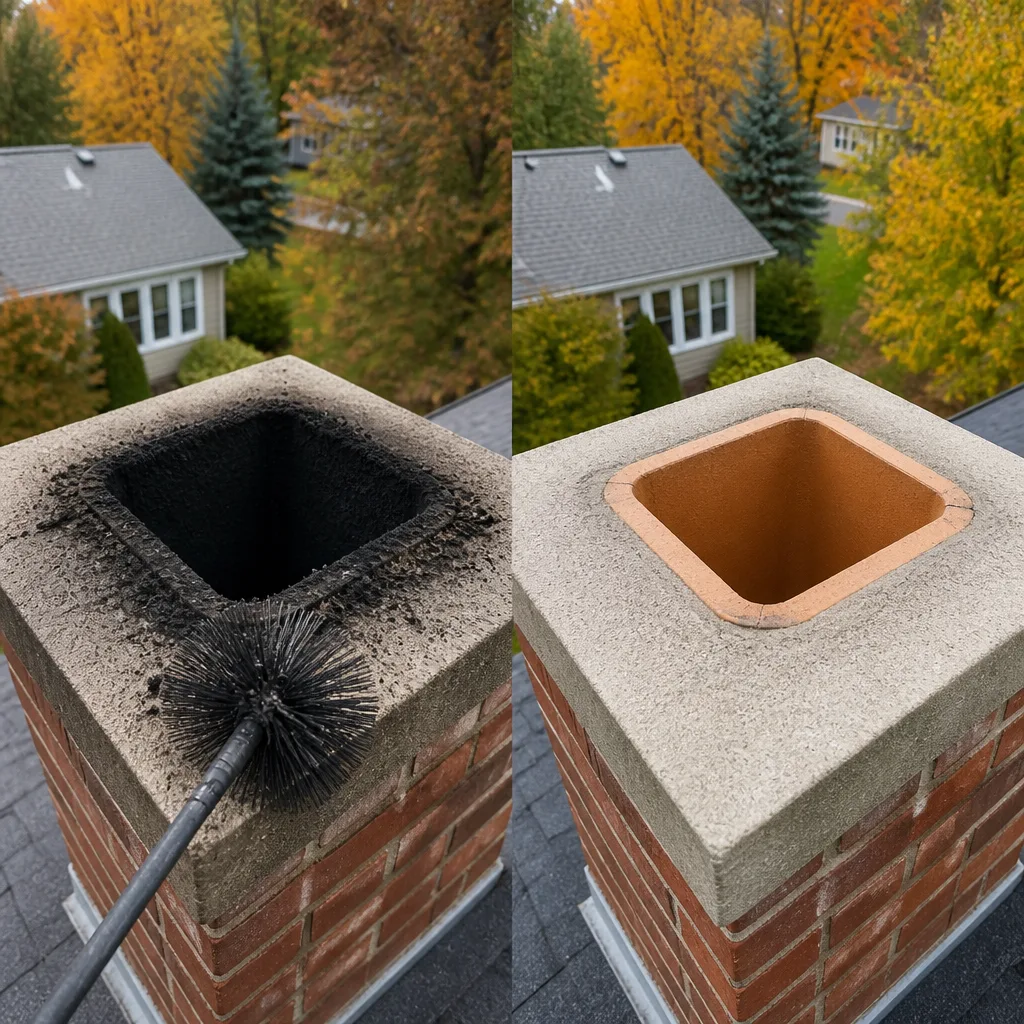 Sweep & inspection
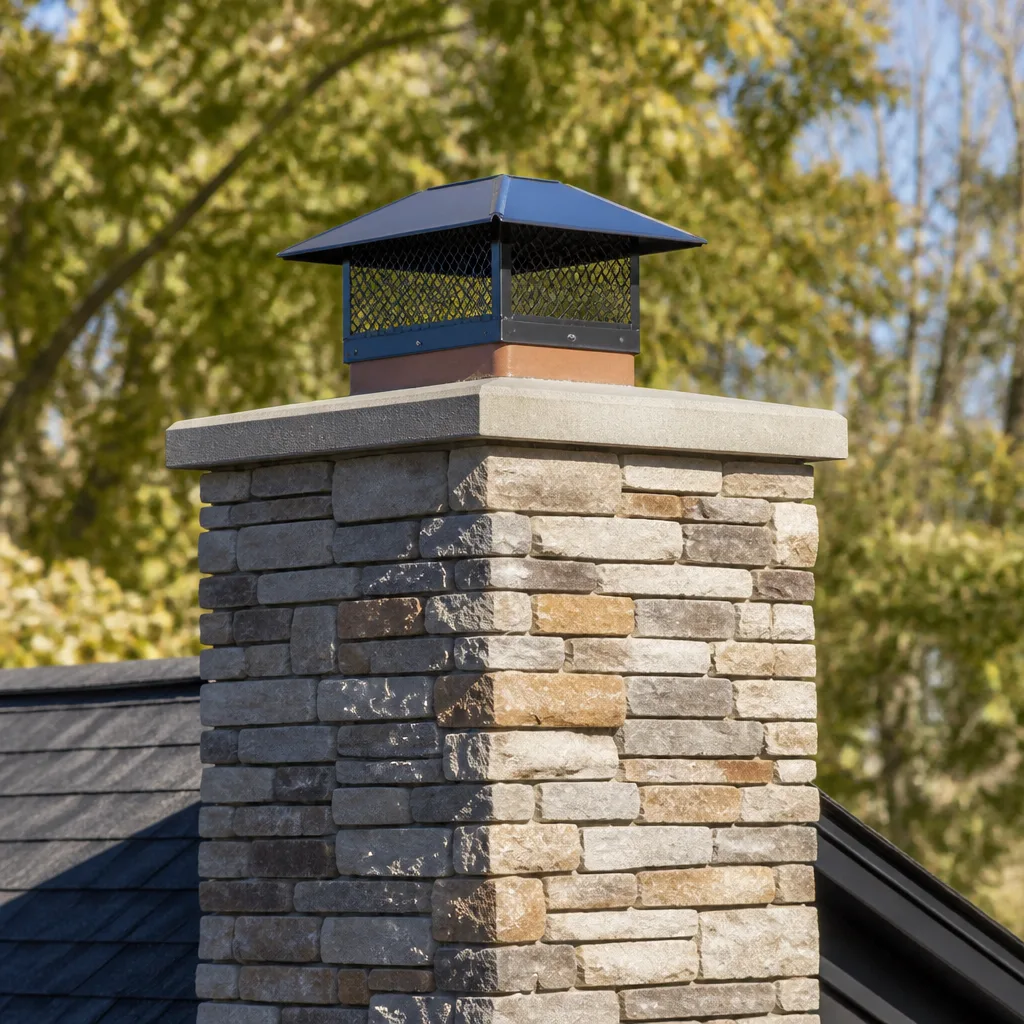 Caps & crowns
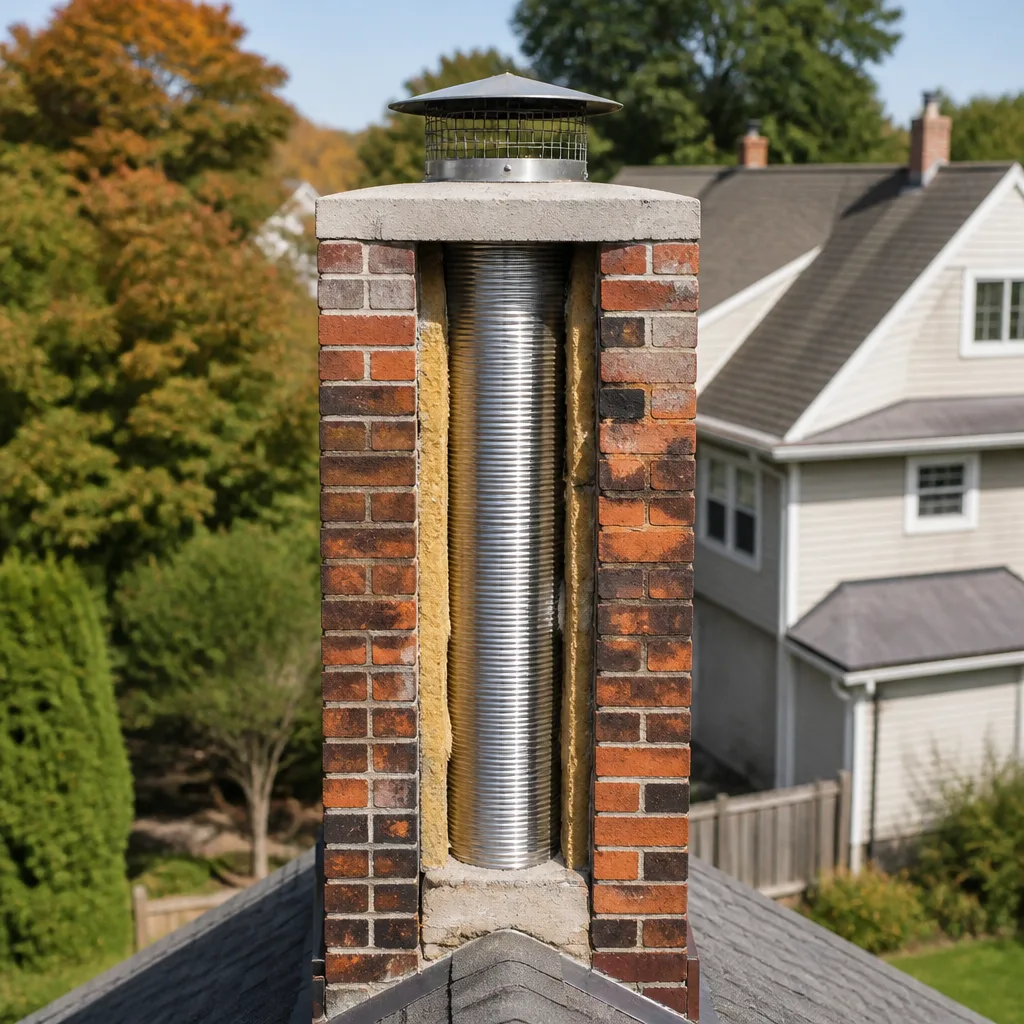 Flue relining
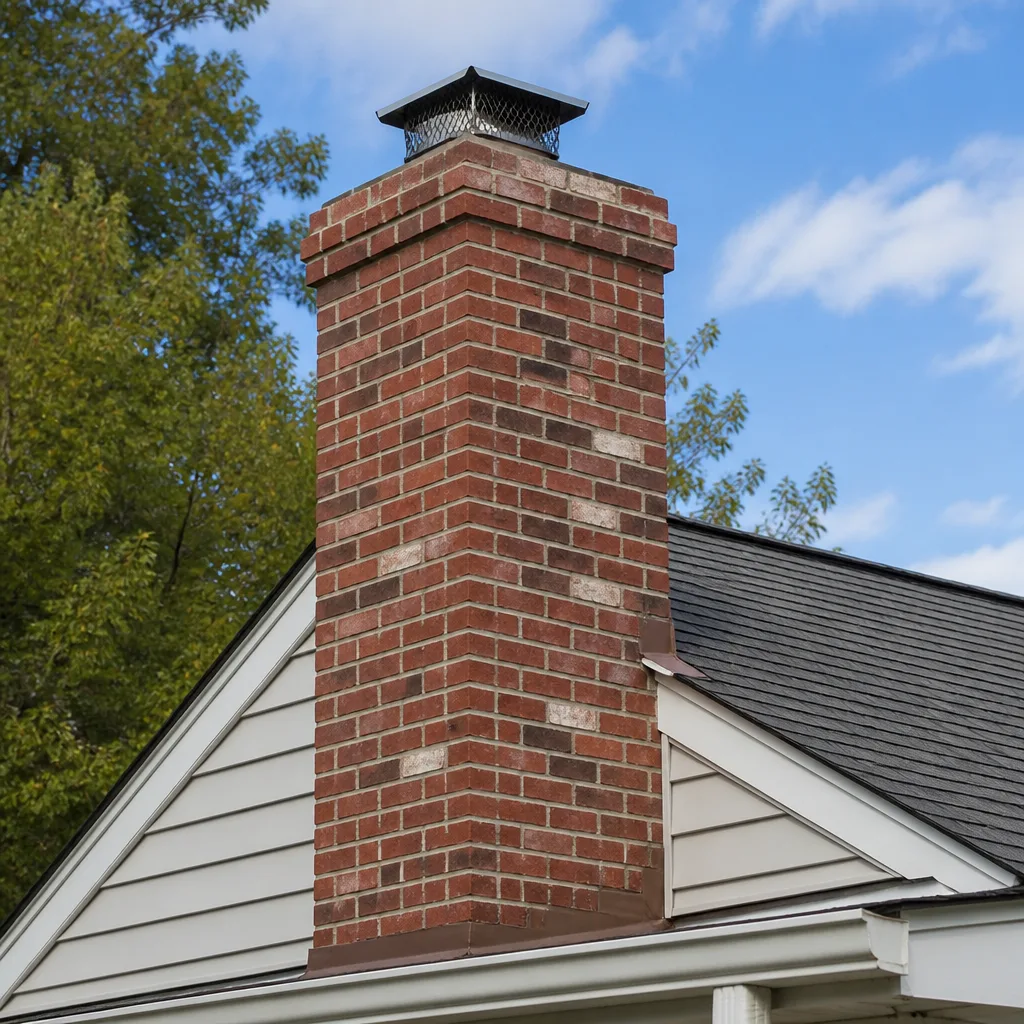 Masonry repair
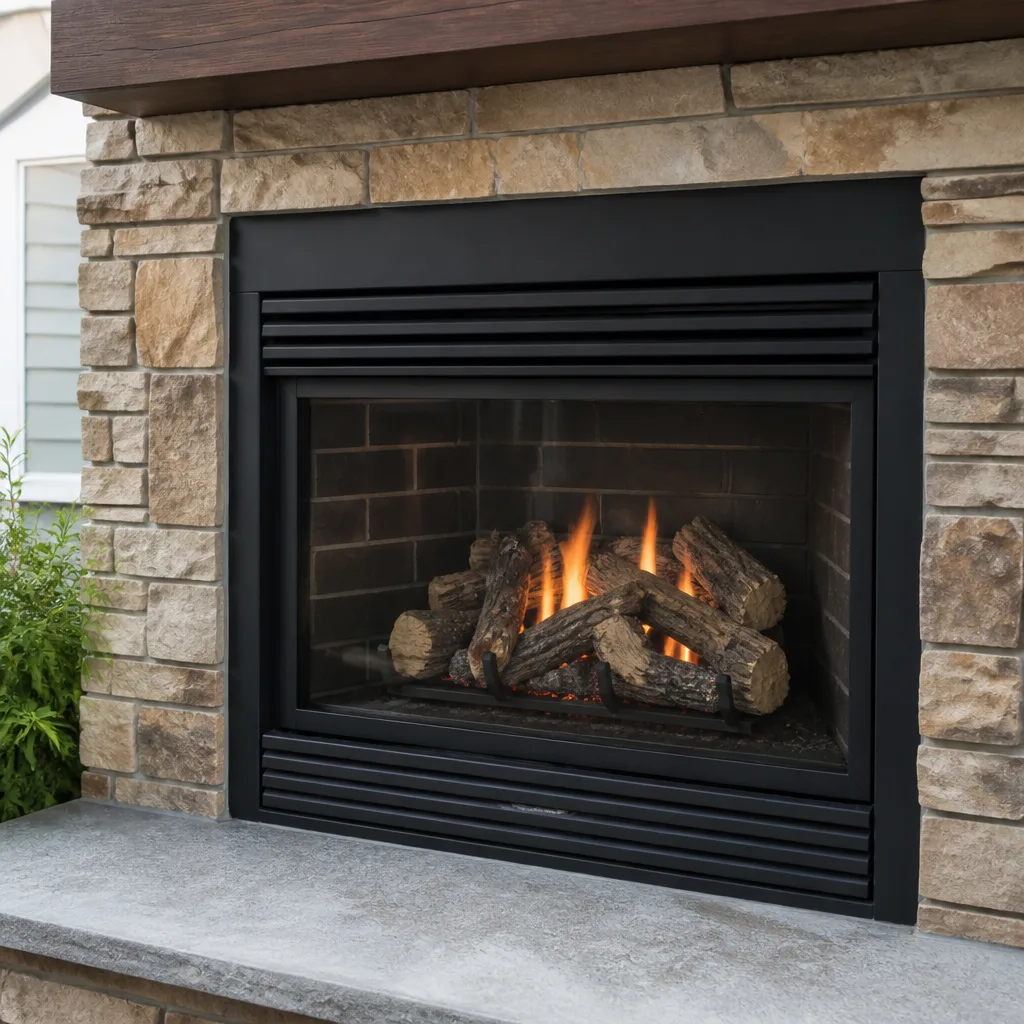 Gas fireplace service
Level 1 sweep and inspection to the NFPA 211 annual standard - flue, crown, cap, and flashing checked and photographed
Chimney sweep logs do not sweep chimneys. They loosen some creosote - which then falls where a brush and vacuum still have to collect it.
DIY vs Professional Chimney Cleaning: The Santa Clarita Homeowner’s Decision Guide
The chimney brush kit on Amazon costs about $85, and it will work fine on a straight, single-story flue with light first-stage creosote. The problem is that “straight, single-story flue with light creosote” describes fewer than 30% of the chimney calls we take in Santa Clarita. Most homes here have offset flues, second-story access, or creosote that has already glazed over into something a nylon brush will skate right across without removing. This guide walks through the exact decision tree: when DIY chimney cleaning is reasonable, what it actually costs, what equipment you need, and the three conditions where you should not touch the chimney yourself under any circumstances.
Quick Answer
DIY chimney cleaning is a legitimate option only when three conditions are all true: your flue is straight and accessible from the roof, the creosote is light and powdery (not shiny or tar-like), and the chimney was professionally inspected within the last three years. If any of those conditions fails, professional chimney cleaning in Santa Clarita is the safer and usually cheaper choice once you account for equipment, roof access, and what a camera inspection catches that a brush cannot. A standard professional sweep in Santa Clarita typically runs $189 to $349, which includes the inspection most DIY attempts skip entirely.
Styles & brands we work with
Table of Contents
- What DIY Chimney Cleaning Actually Involves
- The Three Conditions That Make DIY Reasonable
- What DIY Equipment Costs vs. a Professional Sweep
- Three Situations Where DIY Is Not Safe, Period
- What You Cannot See From the Firebox
- How to Document a DIY Cleaning Properly
- Understanding Creosote Stages: The Core of the Decision
- Common Mistakes to Avoid
What DIY Chimney Cleaning Actually Involves
Let’s be plain about what you’re signing up for. Cleaning a chimney is not dusting a shelf. It means getting on your roof with a brush, rods, a drill in some cases, and enough balance to work near a roof edge while sweeping downward into a fireplace you cannot see. You’ll also need a shop vacuum with a HEPA filter, a drop cloth system inside the house, and a way to verify that you actually removed the creosote rather than just knocking it loose.
The physical work breaks down into four stages:
- Roof access and flue cap removal. You’ll need a ladder rated for the roof height, a harness if you’re on a steep pitch, and the right tools to remove whatever cap or spark arrestor sits on top of the flue.
- Brushing the full flue length. The brush attaches to flexible rods and runs from the top down, or from the firebox up with a drill attachment. Both directions have trade-offs: top-down keeps dust out of the house but requires roof work; bottom-up keeps you off the roof but fills the living room with soot if your seal at the firebox isn’t tight.
- Creosote removal from the smoke shelf and damper. This is the part most homeowners skip. The smoke shelf, that flat ledge just above the damper, catches a lot of creosote and debris. If you don’t clean it, you’ve done half the job.
- Verification. A professional sweep looks up the flue with a light and, often, a camera. A DIY job typically ends with “I guess it looks cleaner.” The difference between “looks cleaner” and “is verified clean” is the whole ballgame when it comes to chimney fires.
In Santa Clarita, the practical reality is that roof access is often harder than people expect. Tile roofs are common here, and walking on clay or concrete tile without cracking it requires more care than walking on asphalt shingles. That’s not a reason to never do DIY, but it is a cost you need to factor into the decision.
Our chimney sweep in Santa Clarita page covers what a full professional cleaning includes, including the inspection component that DIY kits do not provide.
The Three Conditions That Make DIY Reasonable
If you’re reading this because you want to save a few hundred dollars, that’s fair. Here is the honest framework we use when homeowners ask whether they should clean their own chimney. All three conditions need to be true. Not two out of three. All three.
Condition 1: A straight flue with no offsets
A straight flue means the chimney runs directly upward from the firebox to the roof cap without any bends. In Santa Clarita, offset flues are more common than most homeowners realize, especially in two-story homes built in the 1980s and 1990s where the fireplace sits in a living room but the chimney exits the roof in a different location to avoid a ridge line. A brush can technically navigate a 15 or 30 degree offset, but it requires flexible rods, a lot more effort, and a real risk of the brush binding or the rods separating inside the flue. If your chimney has an offset, the DIY case collapses quickly.
Condition 2: First-stage creosote only
First-stage creosote is a light, powdery, brown or gray soot that brushes off easily. It’s what you get from burning seasoned wood with hot, efficient fires in a properly drafting chimney. Second-stage creosote is the shiny, flaky, tar-like glazing that forms when fires burn cooler or wood is slightly green. Third-stage is the hard, glossy, candy-like coating that a wire brush cannot remove; it requires chemical treatments or mechanical removal with rotary tools. If you’re not sure which stage you have, that uncertainty alone is a reason to have a professional look. Guessing wrong means you spend $85 and an afternoon on a problem that needs $400 of professional work anyway.
Condition 3: Professional inspection within the last three years
This is the condition that eliminates most DIY attempts. The Chimney Safety Institute of America (CSIA) and the National Fire Protection Association (NFPA 211) both call for annual inspection of chimneys serving fireplaces, and cleaning when creosote reaches 1/8 inch thickness. If your chimney has not been inspected by a professional in over three years, you do not actually know what you’re dealing with. You may have cracked flue tiles, a deteriorating liner, water intrusion, or a nest that has been there since spring. None of these are visible from the firebox. If you run a brush through a chimney with a cracked liner, you can make the crack worse and create a fire hazard that did not exist before. The inspection has to come first.
A professional chimney inspection in Santa Clarita includes the camera work that establishes whether DIY cleaning is even safe to attempt. Without it, you’re making a decision on incomplete information.
What DIY Equipment Costs vs. a Professional Sweep
Let’s put real numbers on the table, because most “DIY vs professional” articles talk in generalities and that’s not useful. Here’s what a legitimate DIY chimney cleaning costs in Santa Clarita, assuming you own none of the equipment already.
- Chimney brush kit with rods: $45 to $120, depending on flue diameter and rod length. A standard 6-inch round flue kit from a hardware store or online retailer runs about $85.
- Drop cloths, plastic sheeting, and tape: $15 to $30. You need a full seal around the fireplace opening and ideally a barrier across the room entry.
- Shop vacuum with HEPA filter: $80 to $150 if you don’t already own one. A standard household vacuum will not handle fine soot and will blow it through the exhaust. This is a non-negotiable piece.
- Work gloves, safety glasses, and a dust mask (N95 minimum, P100 better): $20 to $45.
- Ladder rental or purchase if you don’t own one: $40 to $75 for a day rental for a 24-foot extension ladder in the Santa Clarita area. Purchasing one is $150 to $250.
- Optional: roof harness and anchor kit: $60 to $120 if you’re working on a steep pitch. On many Santa Clarita tile roofs, this is not optional.
Realistic total for a first-time DIY cleaning: $260 to $540, plus four to six hours of your time, plus the cost of whatever you break on the roof, plus the value of an afternoon you don’t get back.
Compare that to a professional chimney sweep in Santa Clarita, which typically runs $189 to $349 for a standard open fireplace. The professional price includes the cleaning, the inspection, the equipment, the liability insurance, and the disposal of the creosote. When you factor in the cost of the equipment you’ll only use once or twice, DIY is not actually cheaper for a first-time effort. It only becomes cheaper on your second or third cleaning, by which point you should have already had the professional inspection that tells you whether you should be doing it yourself at all.
Flint Chimney Co Santa Clarita gives you a written price before any work starts, so you know exactly what the professional number is before you decide. No call-to-discover-pricing games. That’s part of The Garrison Standard, and it applies to every job we take.
Three Situations Where DIY Is Not Safe, Period
There are conditions where the answer to “should I clean my own chimney” is simply no. Not “maybe with the right tools.” Not “if you’re careful.” No.
1. Second-stage or third-stage creosote
If the creosote in your flue is shiny, flaky, or hard and glossy, a homeowner-grade wire brush will not remove it. Worse, running a wire brush over glazed creosote can polish it, making it harder for a professional rotary cleaning system to get purchase later. Second-stage creosote is a fuel load sitting on the walls of your chimney. It ignites at around 2,000 degrees Fahrenheit. A chimney fire burns hot enough to crack flue tiles and set the framing of your house on fire. Santa Clarita’s hot, dry summers mean even a small chimney fire that stays contained inside the flue is a structure-fire risk in a way it wouldn’t be in a wetter climate. Do not DIY this stage.
2. Offset flues or unusual chimney geometry
As we said earlier, offset flues are common in Santa Clarita homes. They’re also the single most common way a DIY chimney cleaning goes wrong: rods separate inside the flue, the brush jams mid-offset, or the homeowner can’t retrieve the assembly and now has a chimney blocked by a brush head. Removing a jammed brush from an offset flue often requires a professional with a retrieval tool, and that callout cost will exceed what the professional sweep would have cost in the first place. If your flue has any bend, leave it alone.
3. No inspection in three or more years
We touched on this in the decision framework, but it needs its own section. A chimney that hasn’t been inspected in three or more years is an unknown. And an unknown chimney is the one where you discover a cracked flue tile by running a brush through it and making the damage worse. In our experience in Santa Clarita, chimneys that have gone uninspected often have one or more of these problems waiting: deteriorated mortar joints from years of Santa Clarita’s freeze-thaw cycles in winter nights, water damage from the rainy season, animal nests from the spring, or a rusted-out damper. None of these show up from the firebox. All of them change the DIY calculus. If you haven’t had a professional look in three years, that’s the first call you should make, not the last.
If you do discover damage during an inspection, our chimney repair in Santa Clarita page explains what a written repair guarantee looks like and what materials we use, including DuraFlex liners and HeatShield restoration systems.
What You Cannot See From the Firebox
Here’s the thing that separates a professional sweep from a homeowner with a brush: we don’t clean blind. We look first.
From the firebox, a homeowner can see maybe 18 to 24 inches up the flue with a flashlight. That’s it. The average Santa Clarita chimney is 12 to 20 feet of flue from firebox to cap. The parts you can’t see include:
- The flue liner condition for the entire length. Hairline cracks in clay tile liners are invisible from the firebox but are exactly where heat and gases escape into the chimney chase. A camera inspection shows every inch.
- The smoke shelf and damper area. This is where creosote, nesting material, and debris accumulate most heavily, and it’s the hardest place to access and clean properly from above or below.
- The crown and cap condition. Santa Clarita’s summer heat can crack a chimney crown in a single season. A cracked crown lets water into the chimney, which accelerates liner deterioration. You can’t see the crown from inside the house.
- Wall thickness of creosote. A homeowner can guess. A professional measures with proper tools and knows what 1/8 inch actually looks like in context.
The camera gap matters most for liner integrity. A liner is the inner wall of your flue, whether clay tile or stainless steel. Its entire job is to contain heat and combustion gases and route them safely to the outside. If the liner has a crack, even a small one, your chimney is operating outside its design. The worst-case outcome is not a dirty chimney. It’s a chimney fire or carbon monoxide intrusion into the house. And the first sign of a liner problem is almost never visible from the firebox. This is, in plain words, the strongest argument for professional inspection before any cleaning decision, regardless of who ends up doing the brushing.
At Flint Chimney Co Santa Clarita, every inspection includes camera verification, and you see the footage. We don’t ask you to take our word for a liner recommendation. We show you the crack, the gap, or the glazing on the screen and explain what it means in plain language. If we recommend a repair, you’ll know why before you spend a dollar on it.
How to Document a DIY Cleaning Properly
If you’ve worked through the decision framework and determined that DIY is appropriate for your chimney, do this one thing that almost no DIY homeowners do: document it.
A maintenance record matters in three practical situations. First, if you ever sell the home, a buyer or home inspector may ask about chimney maintenance history. “I cleaned it myself” with no record is weaker than “I cleaned it on this date, here’s what I used, here’s what I saw.” Second, if you ever file an insurance claim related to the fireplace or chimney, your insurer will want to know the chimney was maintained. A written record with photos is evidence. Third, and most importantly for your own safety, a record helps you track changes over time. If you clean every year and one year the creosote is noticeably thicker or darker, that’s a signal something changed in your fuel, your drafting, or your burning habits.
Here’s the minimum documentation we recommend:
- Date and time of cleaning. Note the approximate outdoor temperature and weather, since draft conditions affect burn quality.
- Photos before and after. Take photos of the firebox and the damper area before you start, and a photo up the flue after you finish. Even a phone camera with the flash on captures more than your eye does in a dark flue.
- Creosote stage observed. Write down whether it was powdery, flaky, or glazed. Note the thickness if you can estimate it.
- Equipment used. Brush type, rod count, vacuum type. This matters if questions come up later about how thorough the job was.
- Anything unusual seen. Water stains, cracked mortar, nesting material, damper issues, anything that looked different from the last time you looked. Even if you don’t act on it immediately, the record matters.
A spiral notebook kept near the fireplace is fine. A note in your phone with the photos attached is better. The point is that a documented DIY cleaning is a legitimate maintenance activity. An undocumented one is a memory, and memories don’t hold up in an insurance claim or a home sale three years later.
Understanding Creosote Stages: The Core of the Decision
Every chimney cleaning decision, DIY or professional, comes back to one question: what stage of creosote is in the flue? It’s worth understanding the stages on their own terms, because most homeowners have never been taught them.
First-stage creosote
Appearance: powdery, dusty, brown or gray. Feels like fine soot. It forms during hot, efficient burns with seasoned hardwood. This is the stage that a homeowner brush kit can genuinely remove. If this is what’s in your flue and your chimney is straight and accessible, DIY is defensible.
Second-stage creosote
Appearance: shiny, flaky, black chips that look like crushed charcoal or glossy tar. It forms when fires burn cooler or wood has some moisture content. This is the stage where DIY becomes risky. A homeowner brush will knock some of it loose but will not remove it. It requires rotary cleaning with professional equipment.
Third-stage creosote
Appearance: hard, glossy, thick tar coating that looks like a melted candle surface. It holds heat, resists mechanical brushing, and is extremely fuel-rich. This is chimney-fire fuel in its most concentrated form. Third-stage creosote requires chemical treatment, sometimes multiple applications, and professional removal. No homeowner brush kit on the market is designed for this stage.
The most common pattern we see in Santa Clarita: a homeowner burns a mix of seasoned and semi-seasoned wood through the winter, gets a mix of first and second-stage creosote, and assumes it’s all first-stage because the firebox looks fine. The top third of the flue is where second-stage creosote concentrates, because that’s where the smoke cools and condenses. You can’t see the top third from the firebox. This is precisely why so many DIY cleanings leave the most dangerous creosote untouched.
Common Mistakes to Avoid
- Starting without an inspection. Cleaning a chimney you haven’t inspected is like drilling into a wall without checking for wires. In Santa Clarita, where many homes are 25 to 40 years old, chimney liners have had decades to deteriorate. Get the inspection first, then decide who does the brushing.
- Using the wrong brush size. A brush that’s too small for your flue diameter will polish the walls instead of scraping them. A brush that’s too large will bind and possibly stick. Knowing your flue’s exact inside diameter is step one, and it requires either a measurement you trust or a professional who already has it on file.
- Skipping the smoke shelf. The smoke shelf behind and above the damper is where debris piles up. A top-down brushing alone will push debris onto the shelf, not remove it. You need to clear the shelf manually or with a specialized vacuum attachment. Skipping it means leaving a fuel pile exactly where a chimney fire can feed on it.
- Sealing the firebox poorly. A weak seal at the fireplace opening means soot gets pushed into the house by the very act of sweeping. A proper seal uses plastic sheeting taped tightly across the full opening, plus a slit for the vacuum hose. Half-hearted taping equals a living room dusted in fine black soot.
- Working solo on the roof. A ladder should have someone footed at the base. A person on a roof should have a phone in a pocket. In Santa Clarita’s summer heat, roof work in the middle of the day adds heat exhaustion to the risk list. Clean in the morning, bring water, and tell someone you’re up there.
- Ignoring evidence of prior damage. If you see cracked tiles, rust stains, or loose mortar during a DIY attempt, stop. That’s not a cleaning problem. It’s a repair problem, and running a brush through it can make it worse. Note what you saw, document it, and call a professional for the repair side of the work.
- Assuming one cleaning lasts a year. How often a chimney needs cleaning depends on burn frequency, wood quality, and heater type. A chimney that gets 30 fires a season will build creosote faster than one that gets 10. Santa Clarita’s relatively short burn season works in homeowners’ favor here, but it doesn’t eliminate the need for an annual look.
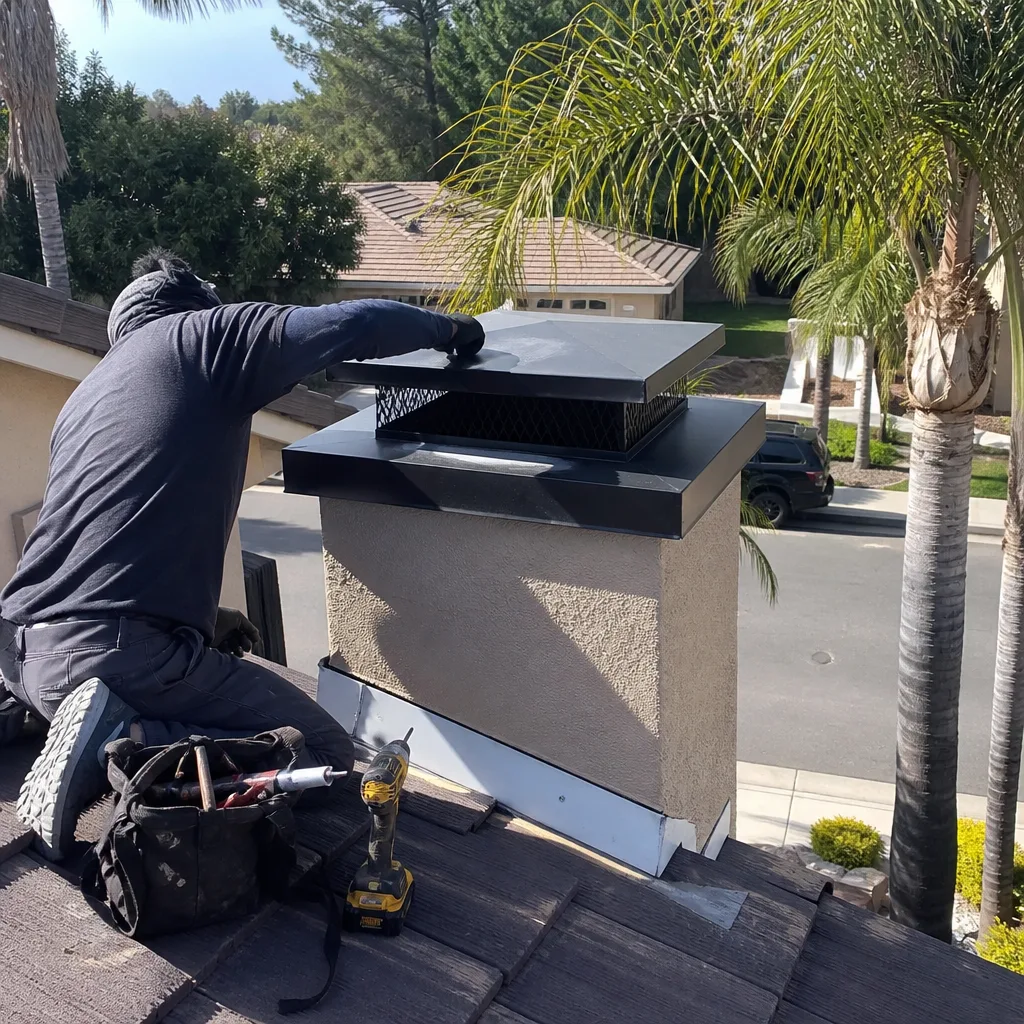
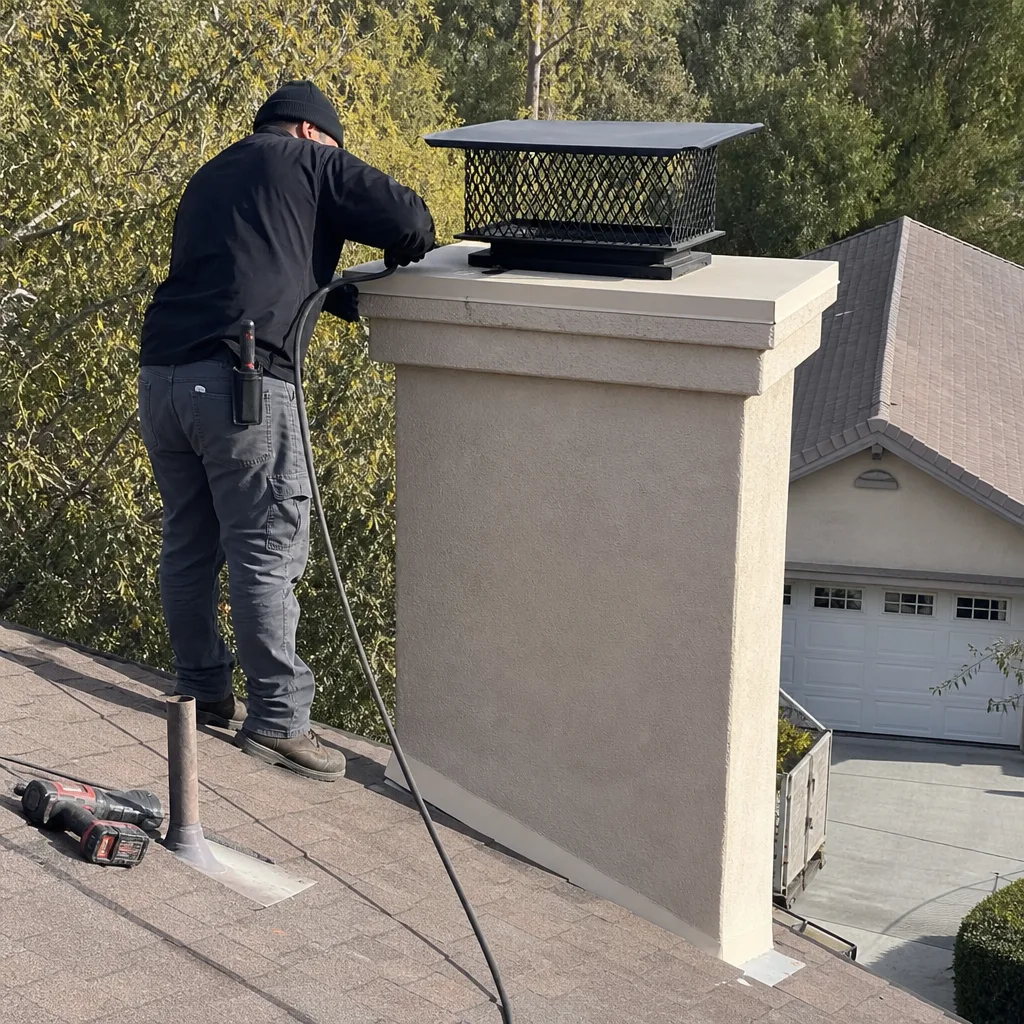
See the difference
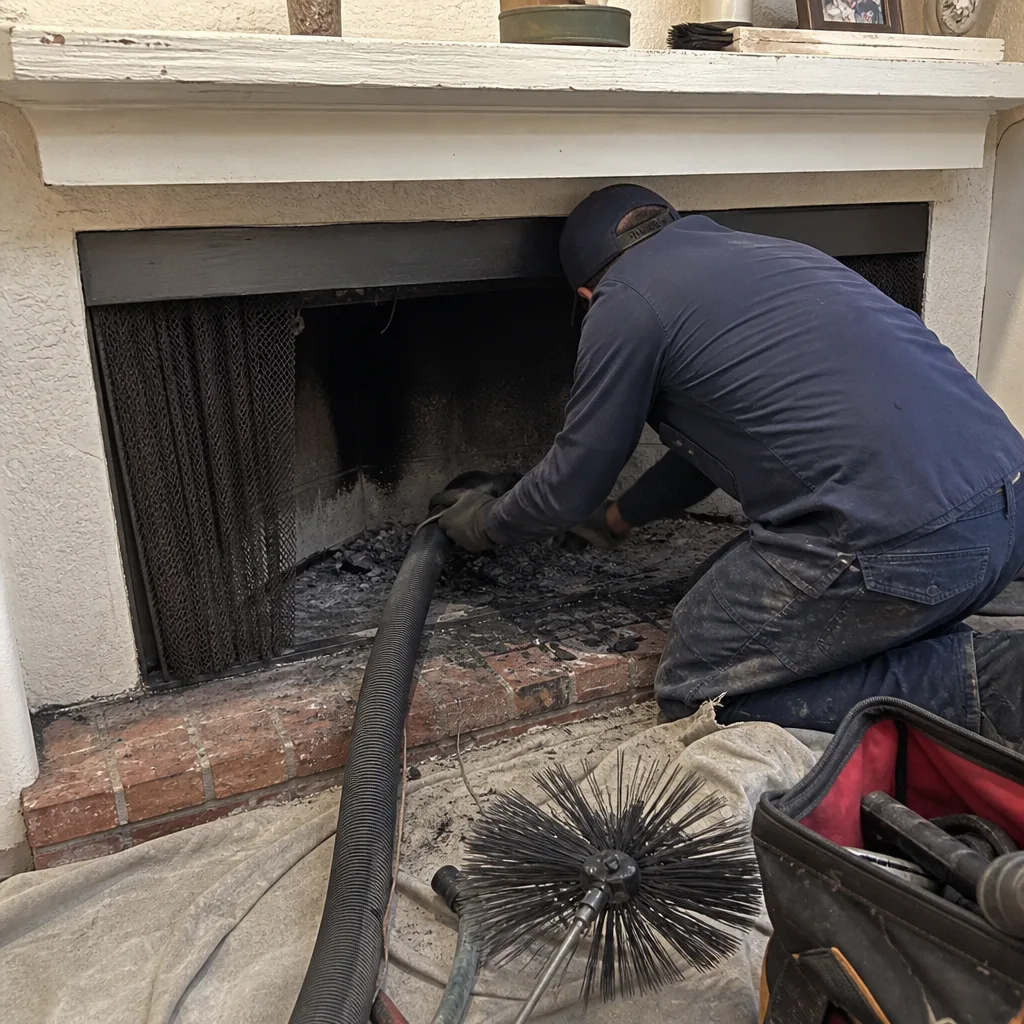 Before
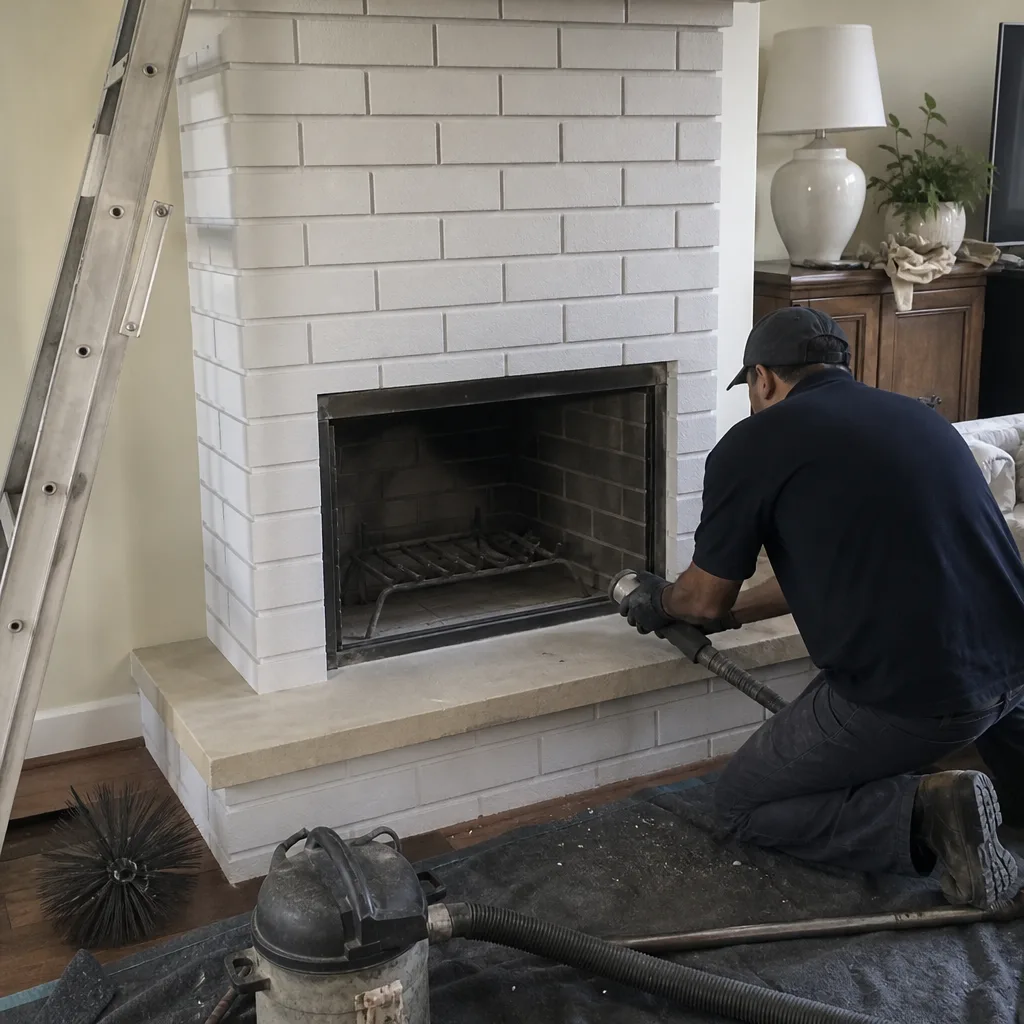 After
After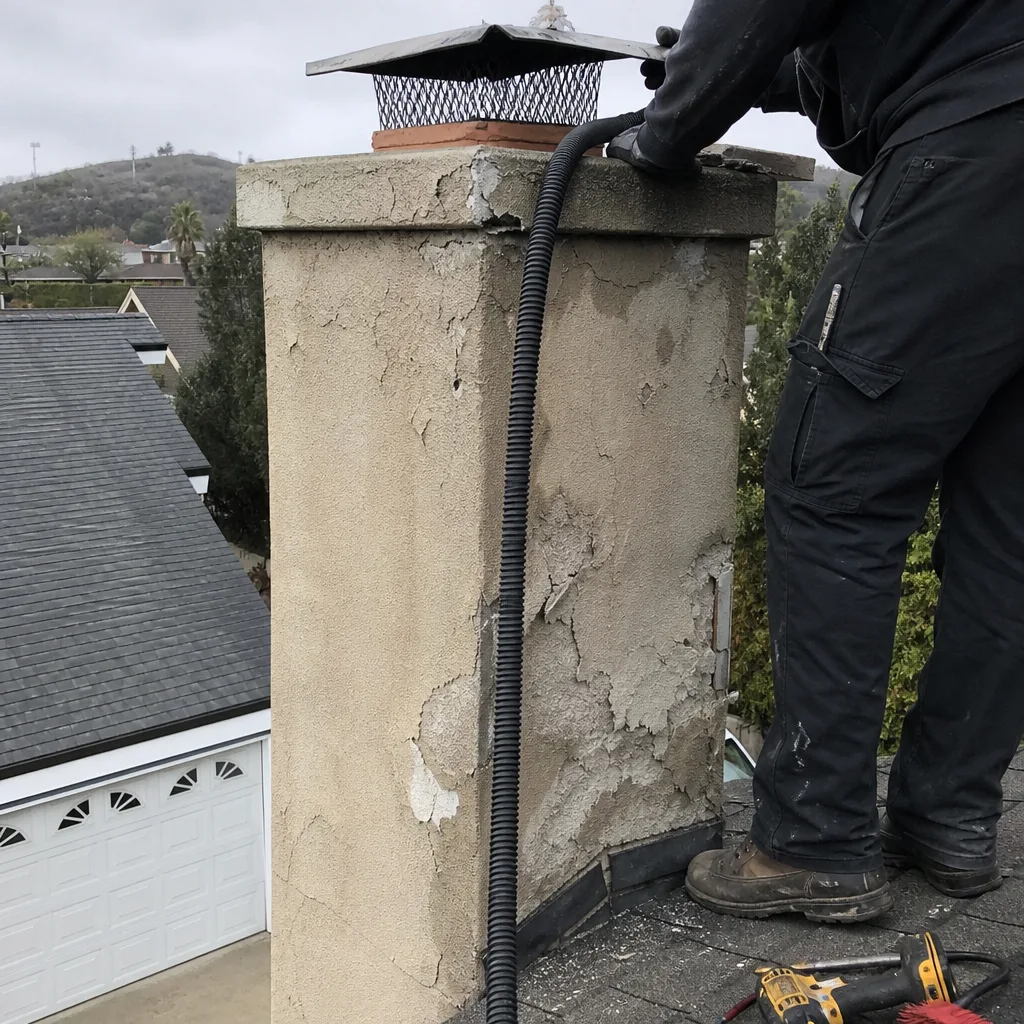 Before
 After
After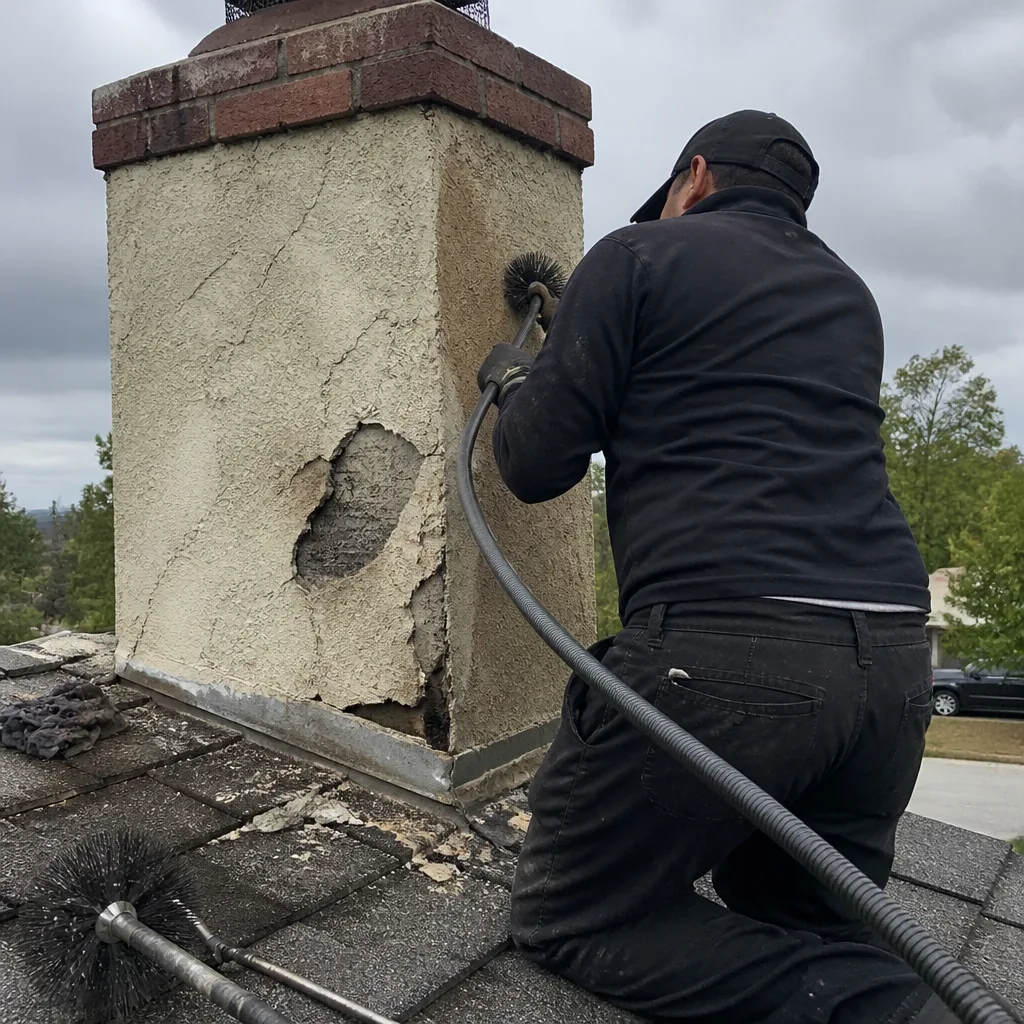 Before
 After
AfterWhen to Call a Professional
Call a professional when any of these apply: your flue has an offset, you haven’t had an inspection in three or more years, you see shiny or glazed creosote, you’re on a tile roof and don’t want to risk cracking it, or you simply don’t want to spend four to six hours on a roof with a brush when a pro can do it in under two hours with better equipment and a camera. None of these are failures. They’re sound decisions. Flint Chimney Co Santa Clarita offers free estimates in Santa Clarita, and you can call (661) 430-6125 to get one. The estimate is written, it’s the number you’ll pay, and there’s no pressure to book that day.
Frequently Asked Questions
A standard chimney sweep in Santa Clarita typically costs between $189 and $349 for an open fireplace, depending on chimney height, creosote stage, and access conditions. That price includes the cleaning, the inspection component, and disposal. DIY equipment for a first-time cleaning runs $260 to $540, so professional cleaning is usually cheaper the first time around. Call (661) 430-6125 for a written estimate specific to your chimney.
Yes, if your flue is straight, the creosote is first-stage only, and the chimney was professionally inspected within the last three years. If all three conditions are true, a homeowner brush kit can do a legitimate job. If any one of them is not true, DIY becomes either dangerous or ineffective, usually both.
The NFPA standard is to sweep when creosote reaches 1/8 inch thickness, which for most Santa Clarita homes with regular wood-burning fireplaces means once per burn season. Given Santa Clarita’s relatively short winter burning season, many homes need one cleaning per year. Homes that burn more than 30 fires a season, or that burn less-than-seasoned wood, may need more frequent attention.
Creosote builds up on the flue walls, and creosote is flammable. If it ignites, you get a chimney fire, which can crack flue tiles, damage the liner, and in the worst case spread to the house framing. Carbon monoxide risk also increases if the flue is partially blocked by creosote or debris. The risk accumulates slowly, which is why skipped cleanings feel safe until they aren’t.
A camera inspection is how a sweep verifies liner integrity along the full flue length, including the top third you can’t see from the firebox. It is not an upsell. It’s the difference between “the chimney looks clean” and “the chimney is confirmed safe to operate.” At Flint Chimney Co Santa Clarita, camera footage is included in the inspection and you see what we see.
Yes, with a caveat. Light use builds creosote more slowly, but it still builds, and light use is also when homeowners miss the early signs of water damage or animal intrusion because they’re not paying attention to the chimney. An annual professional look is the cheapest way to catch a small problem before it becomes a liner replacement. Call (661) 430-6125 if you haven’t had yours looked at recently.
The Bottom Line
DIY chimney cleaning is not a scam and it’s not a boogeyman. It’s a legitimate option under specific, narrow conditions that most Santa Clarita homes do not actually meet. Straight flue, first-stage creosote, recent professional inspection: those three things together make DIY reasonable. Anything else and you’re paying with risk instead of money. A professional sweep in Santa Clarita costs roughly the same as a first-time DIY setup, includes the inspection component DIY skips, and comes with a written price and a written guarantee. That’s the decision framework. It’s not about fear. It’s about knowing what you’re actually dealing with before you climb a ladder.
Written by Hank Delano, Owner at Flint Chimney Co Santa Clarita, serving Santa Clarita since 2002.